

New tango shoes

I left my heart AND my shoes in Buenos Aires
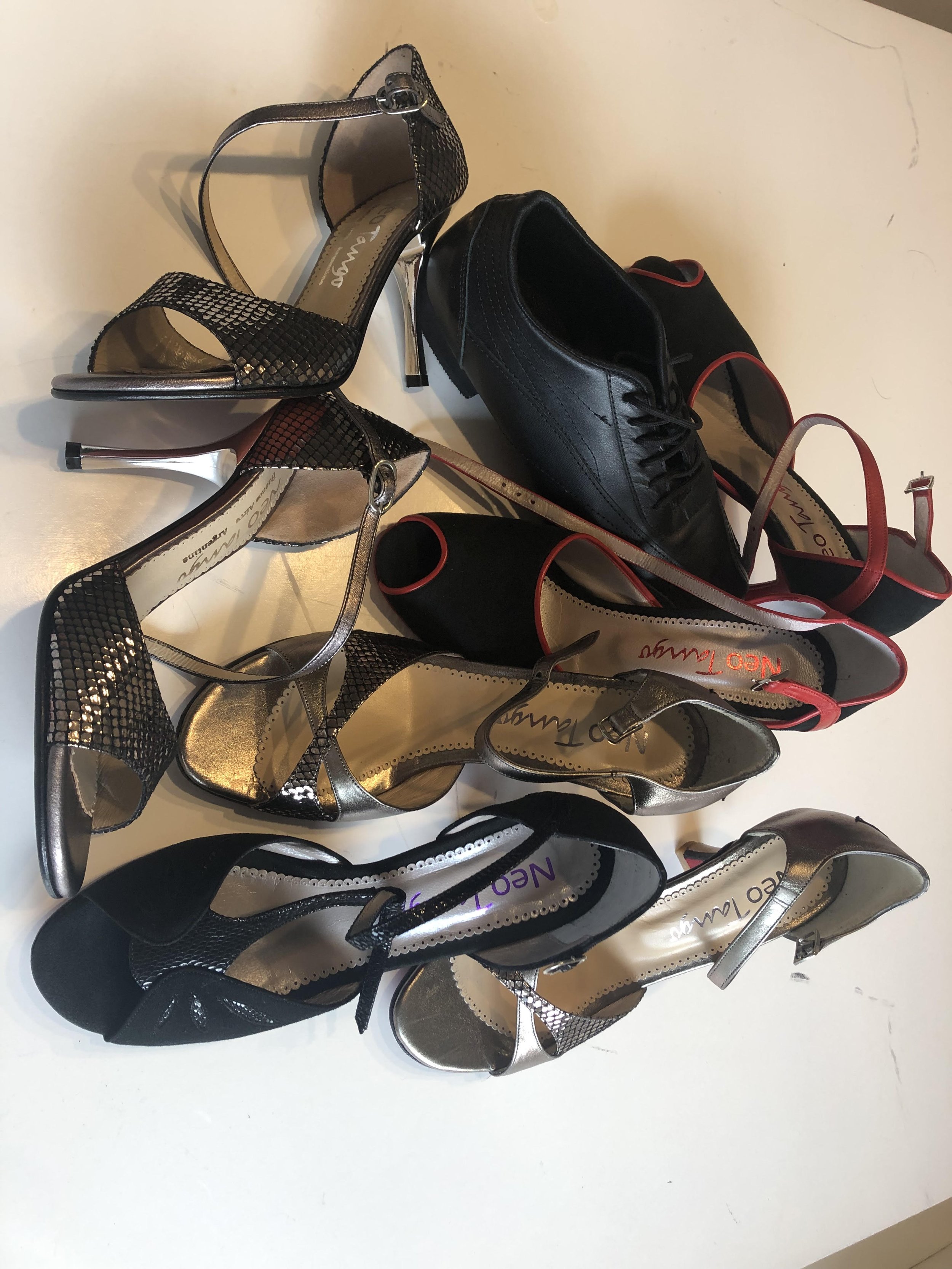
I have started to break in my new tango shoes from Buenos Aires. I like to use them for solo practice first, then take them out dancing later. I did NOT follow my own advice and wore new shoes out in Buenos Aires—and am just healing a huge blister from one night of being stupid!
Look at your old tango shoes. Do you wear them down on the outside or inside of the heel? What are your movement habits, based on what you see from your shoes? I was that kid walking along on the outsides of my shoes, and after years of work, I still tend to roll out onto the outsides of my shoes. I focus on “big toe energy” to balance that tendency, and over time, my shoes have shown an improvement in the wear pattern.
New shoes do not have any of your old postural habits. They are a new canvas and start dancing with you at your current level of expertise. I know it is hard to throw out your old shoes. When you have danced with the support of your new shoes, try your old ones. Do they feel as if they are supporting you, or do they sag? If they are truly worn out, thank them for their service—and throw them out!
My tango word for 2024: Collaboration
When I spend time in Buenos Aires, taking lessons and dancing in the milongas, I always come home with a renewed energy to teach Portland dancers to dance like Buenos Aires dancers. For 2024, there are a few items on my to-do list that I feel benefit all dancers. Number one: collaboration!
Collaboration
I had the most enjoyable time dancing to live music that I have ever had the night Cuarteto Mulenga played at Lo de Celia. A man I did not know had asked me to dance earlier in the evening and asked me again when the live music started. I find many dancers do not dance their best to live music: they feel comfortable dancing to the version of a song they already know, so I was prepared for a second tanda that was not as good as the first.
In this case, I felt as if I had been given the gift of collaboration. We were BOTH dancing to new music, interacting with the music and each other. He listened to what I was doing, made suggestions, and riffed off my energy. His lead was stable and clear, and I could choose to follow it, or suggest other moves because of his stability. That level of collaboration rarely occurs on the dance floor, and I enjoyed every minute. When I sat down to video because I had promised my students to do so, the man sat nearby and waited for me to finish. “Just look at me when you are ready!” he said. More fabulous dancing ensued.
I want to bring more collaboration into the dance for leader and follower. The tango is enhanced with such a high level of play, improvisation and close communication. Let’s ALL dance like that! Join my classes this winter to enhance your collaborative skills in your tango!
Buenos Aires booster shot
Back with an agenda
I come home from Buenos Aires more energized to teach and more devoted than ever to producing dancers who can get off the plane, onto the dance floor, and fit right into Buenos Aires milongas. Dancing in the USA, we can forget minute details of tango that slip away with more distance from Argentina.
I always take time to take at least a few lessons. Anyone who thinks that I don’t need lessons because I have taught tango for 28 years, does not understand that tango is an ongoing exploration! I study with different teachers who do not always follow my preferred style: I try to listen to what they have to say and incorporate it into what I do if I feel I can benefit from the feedback.
Here are a few details that have changed this time in my dance, and they will show up in my teaching, as I try to share everything that I learn.
Embrace
I learned on the dance floor something I should have been able to explain before. 20/20 and hindsight… I danced with three people who took me in their arms, and I immediately felt relaxed, safe, calm—not my regular feeling when running a tour! I felt my pulse slow as I slipped into their arms. One of my new goals is to create dancers who can dance like that!
The other part of my embrace improvement came from lessons with Valencia Batiuk and Jose Garofalo. I have studied with both on and off for years, and I have learned to let the information work its way into my body over time. As my teachers explained their idea of the embrace, I kept saying, “Yes! I agree! That’s what I teach!” “Then DO it,” Valencia said. Oy. How will people understand it if I say to dance more in front of each other, but not toe-to-toe, especially when there are already arguments about what is correct?
I still do not know how to describe the changes to my embrace succinctly, I am attempting to transmit my new feeling in the dance to my students. Briefly, my new embrace feels more energized and solid, but does not pull the follower in. It does not let the follower wander away. There is space inside the embrace for the follower to pivot and move, but it feels more secure.
Arrive!
“You need to arrive!” was another comment from Valencia. I didn’t understand what she was trying to explain in words, but I could feel the difference. I then worked with Jose Garofalo to solidify my technique in my most joyous tango lesson ever. I am grounding my axis better. I can establish a clearer location and better timing for my follower when I do it right, which translates to a freer, more energized follower. I can feel when I DON’T do it correctly. I hope words will follow the understanding! In the interim, I am working with my students on the intention and the feeling, and I see a distinct difference when it works. Yay!
Musicality
It may not be fair to measure a dancer in the USA against a milonguero in Buenos Aires in terms of musicality. Most people here did not grow up with tango music. If you have heard tango your entire life, you will use the music better. However, there is no impediment to improving how we use music. Sheer familiarity does help: start listening more to the music when you aren’t dancing!
We will play musical games that encourage exploration, play, and deep listening.

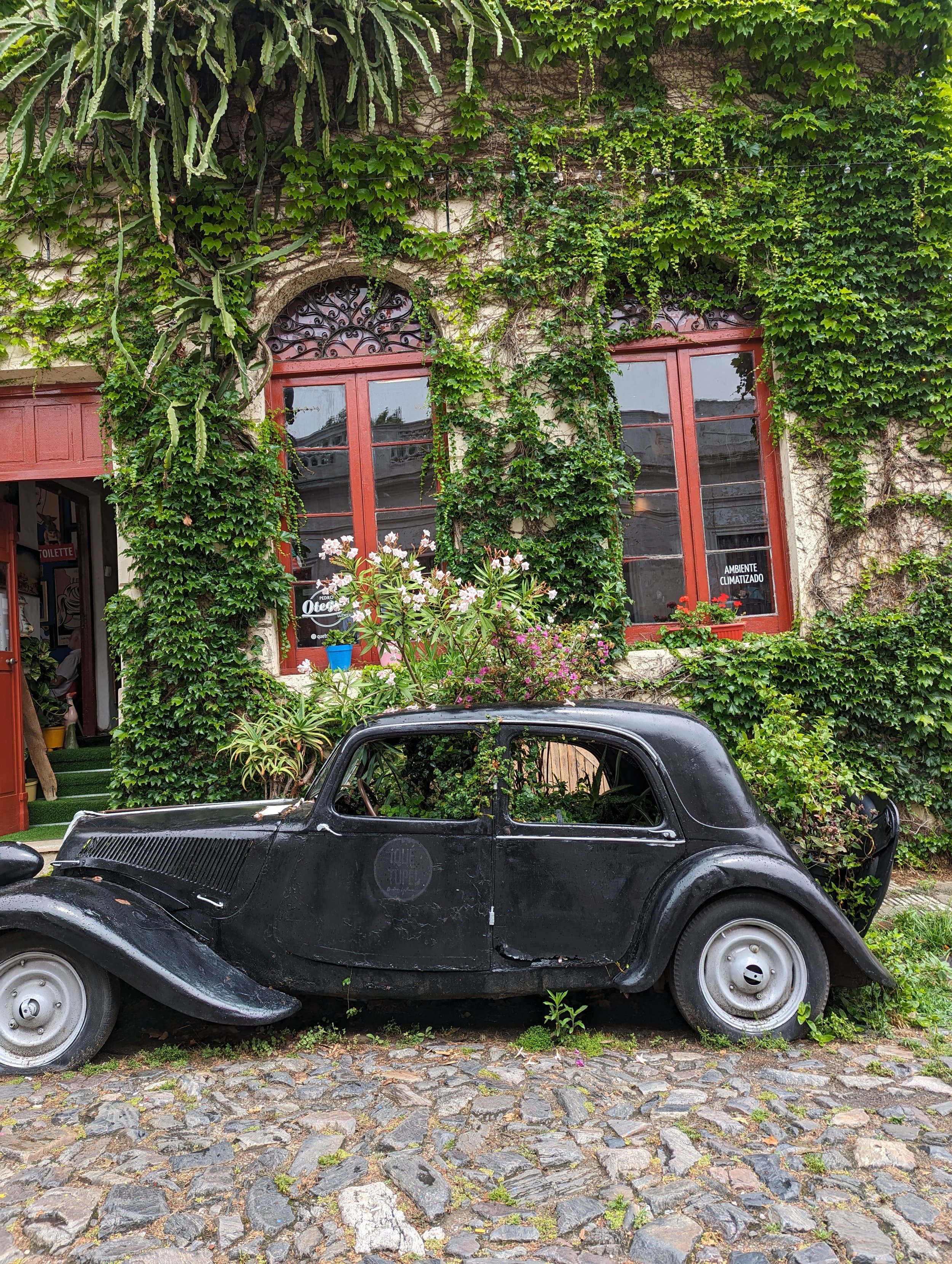
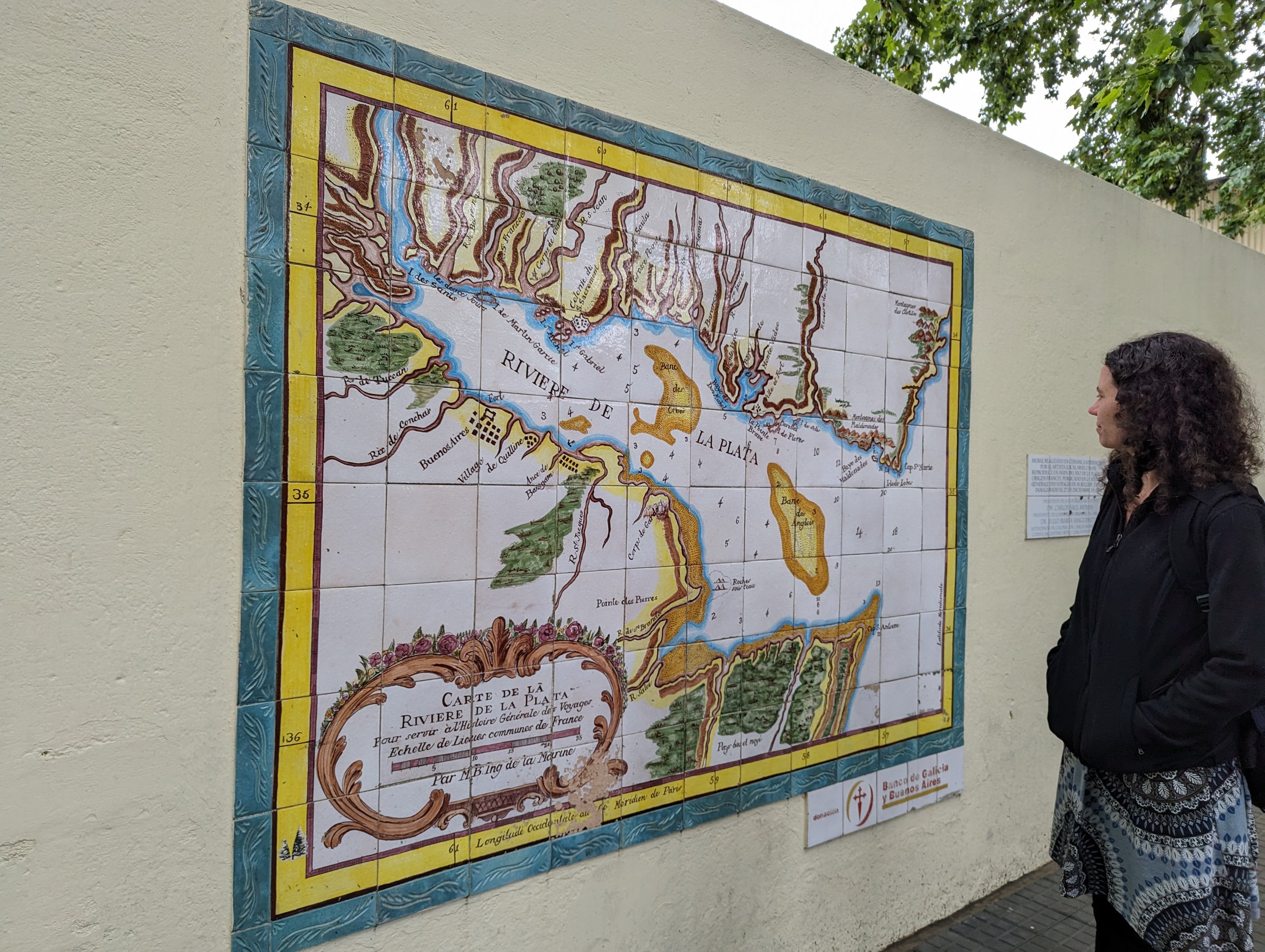
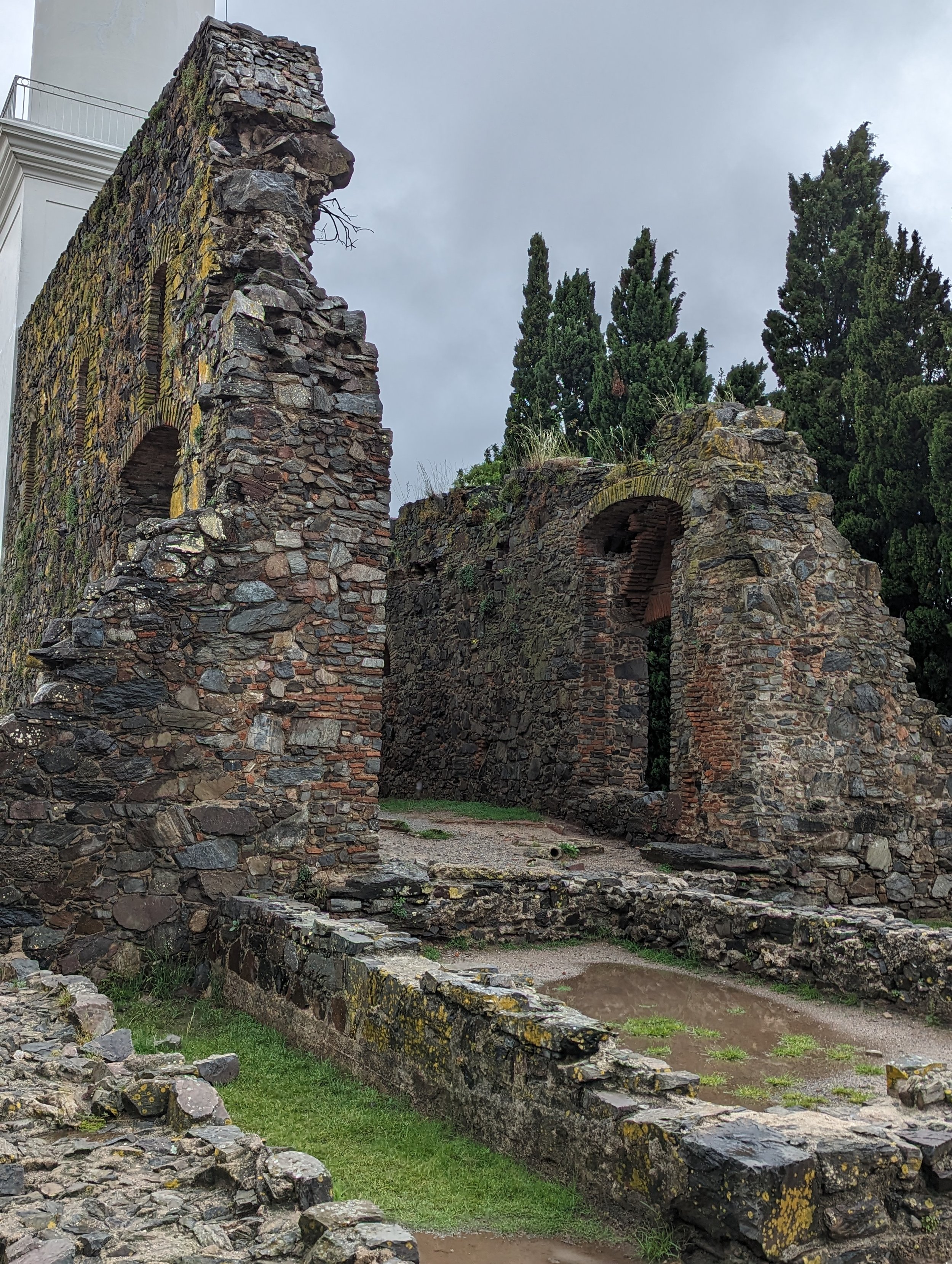
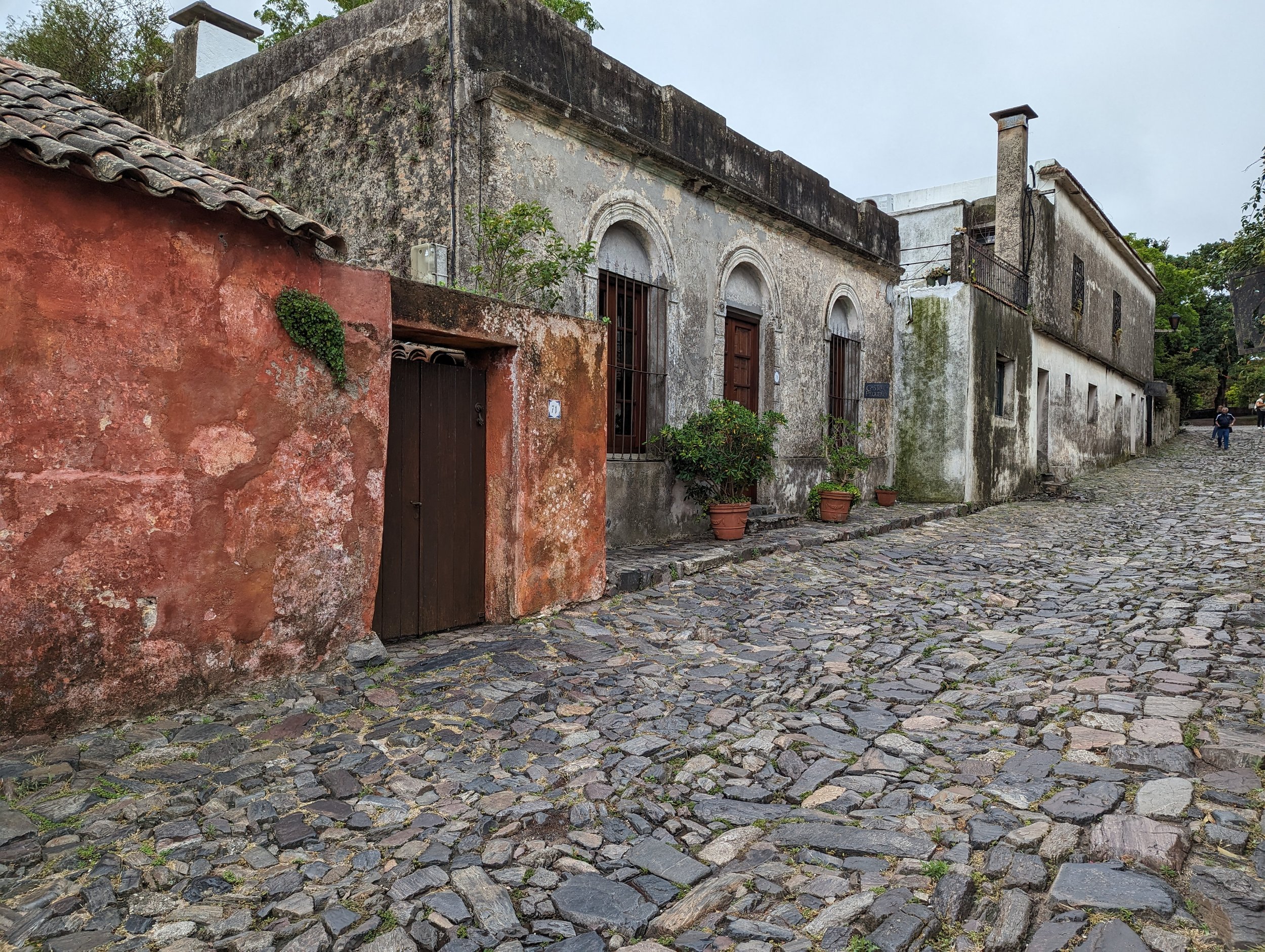
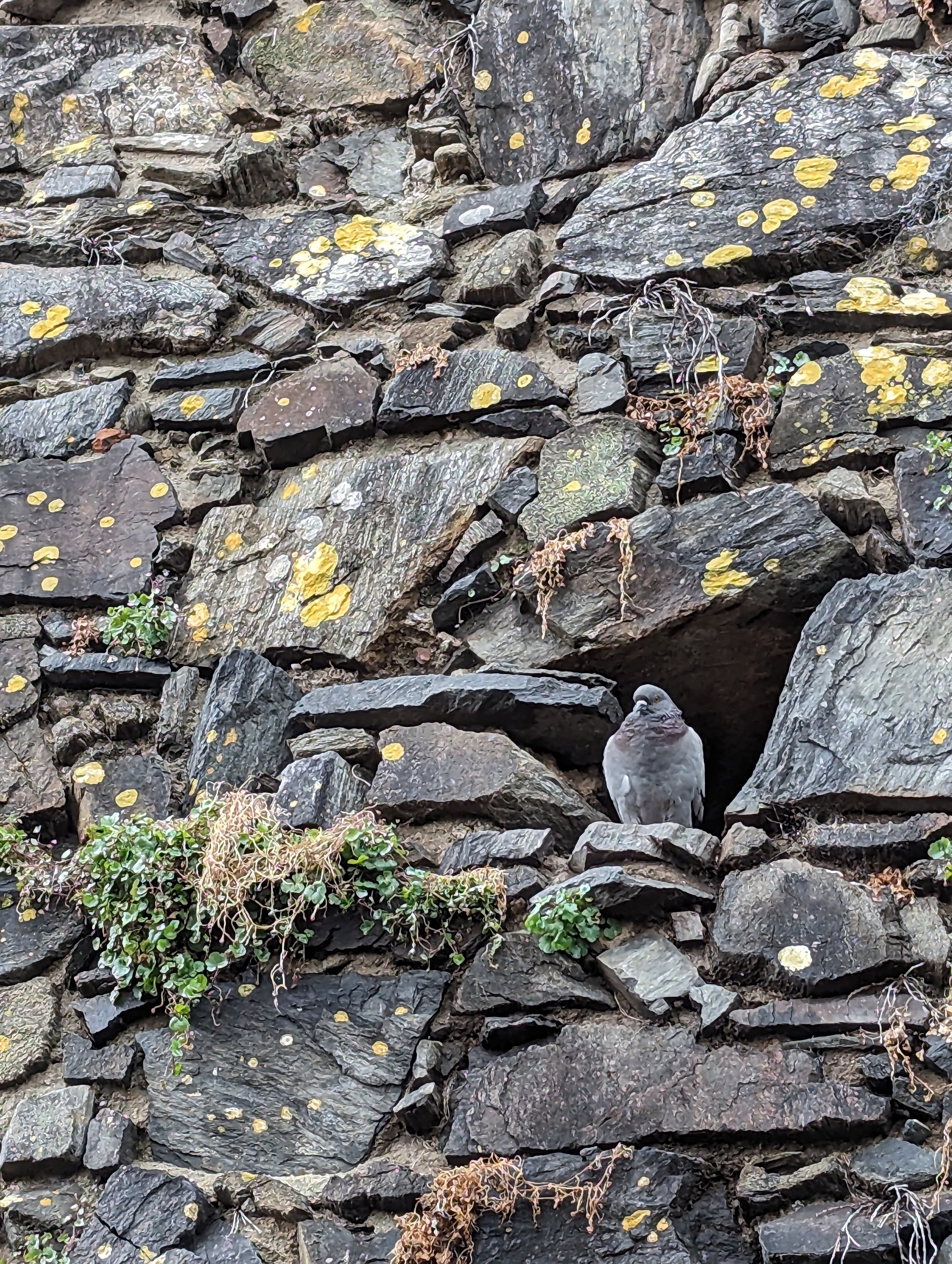
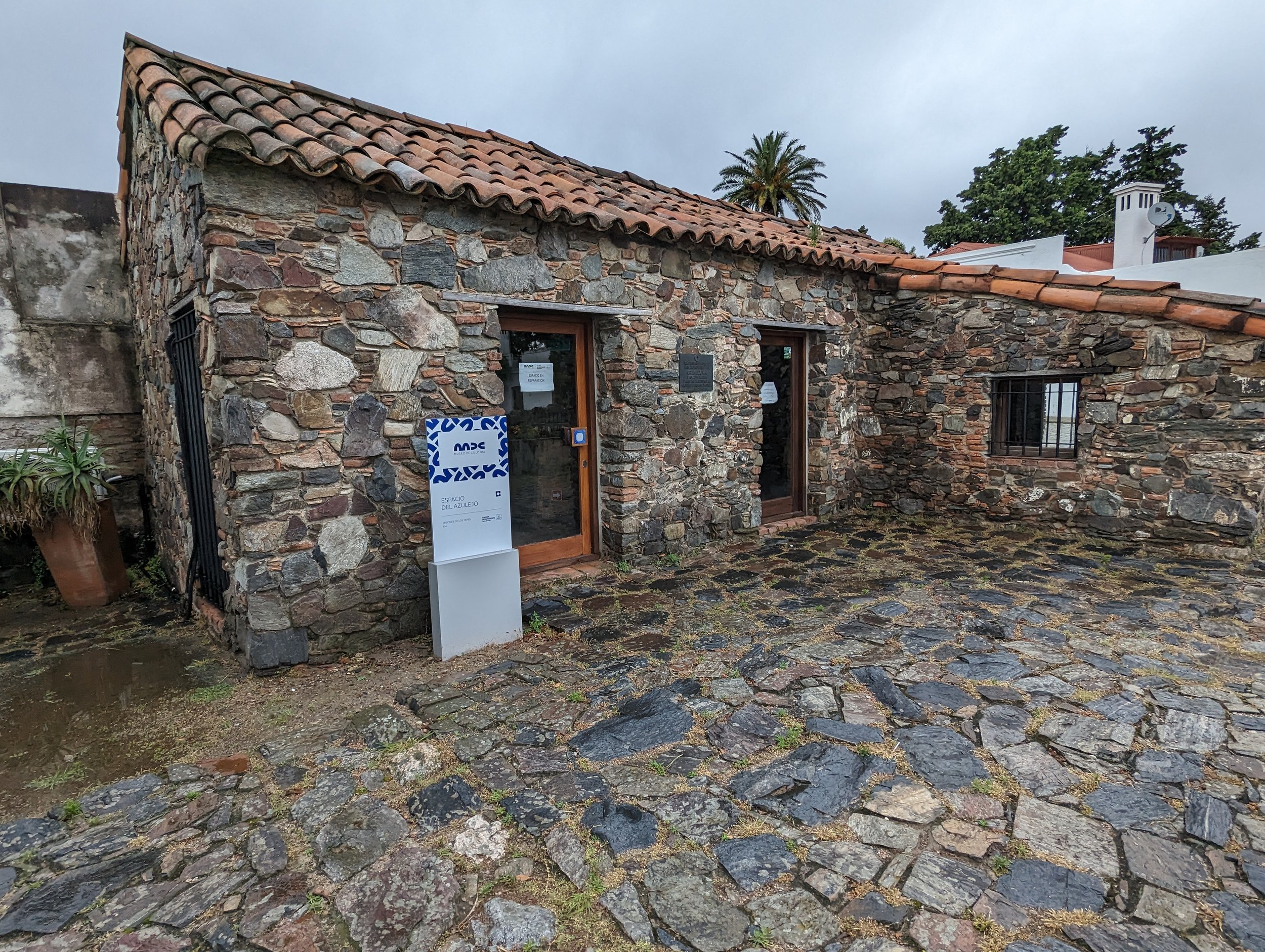
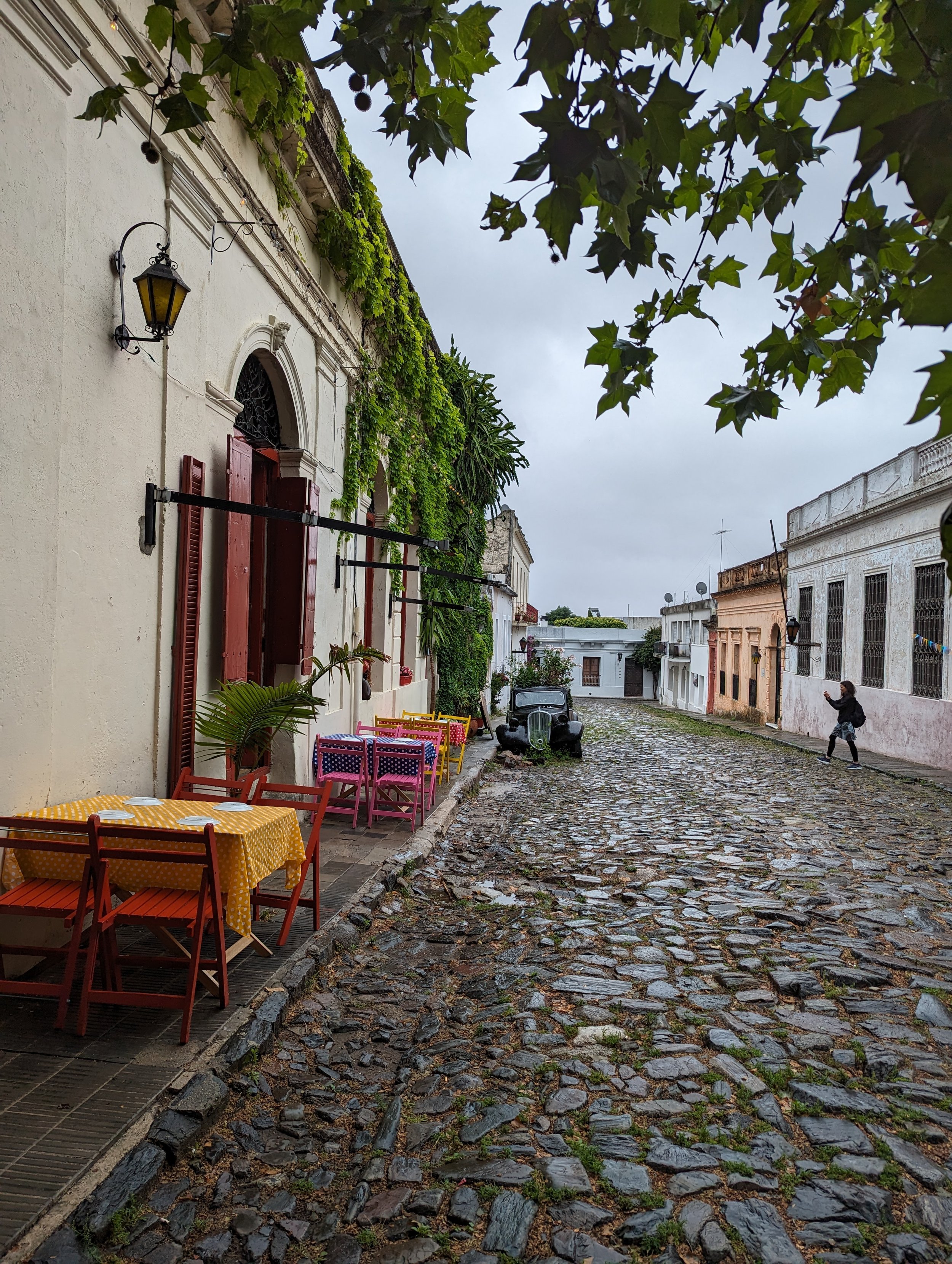
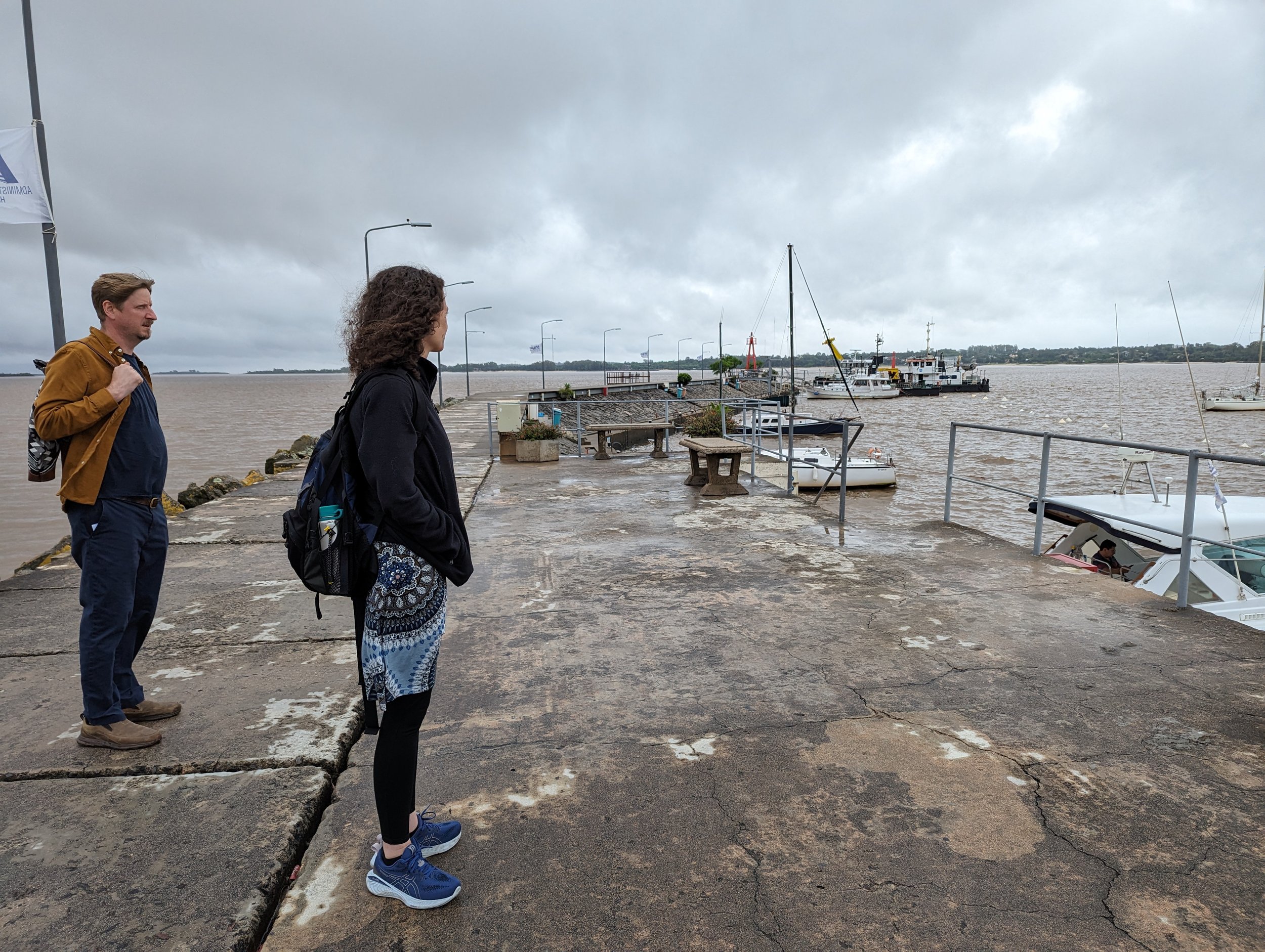
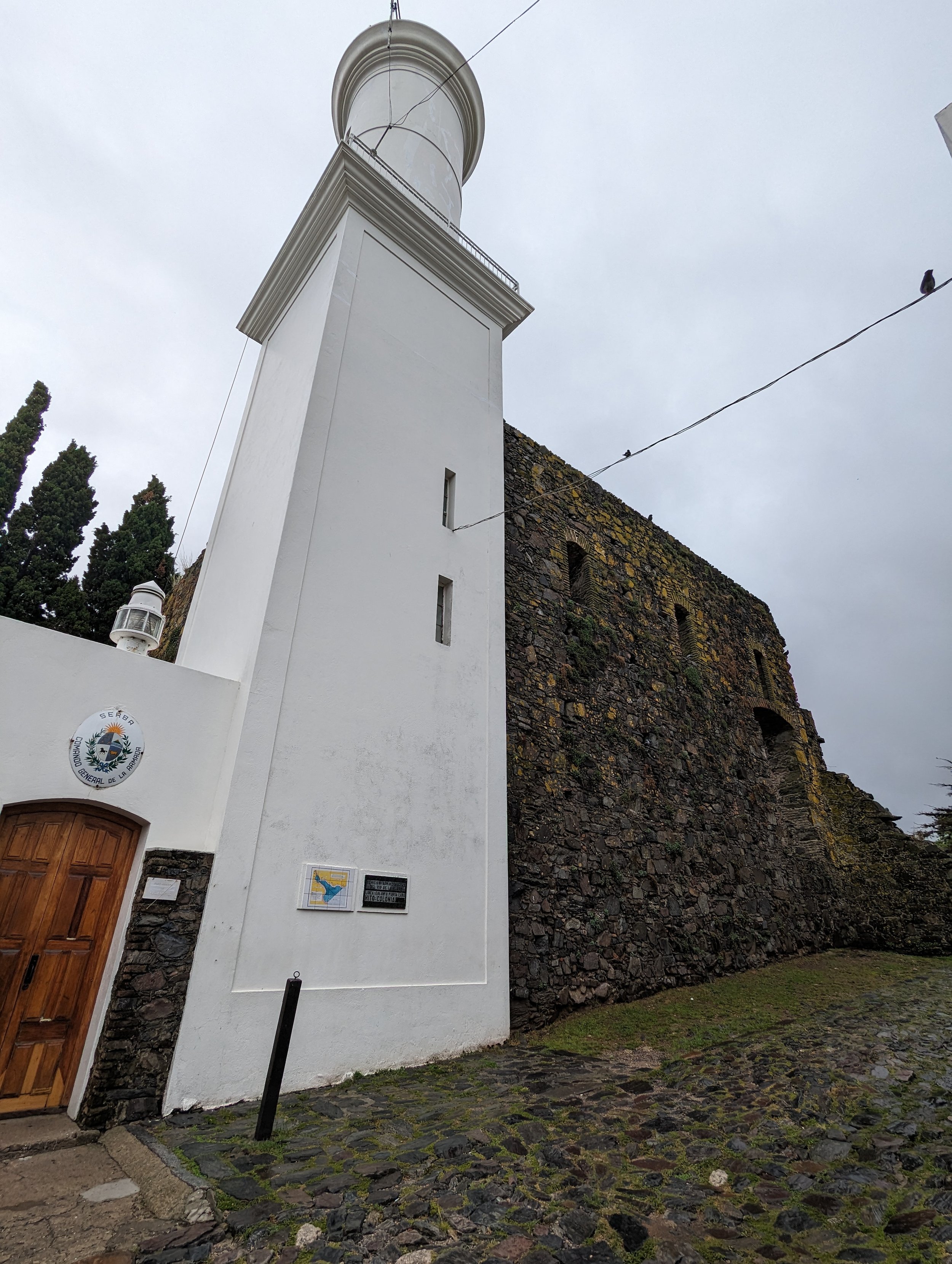
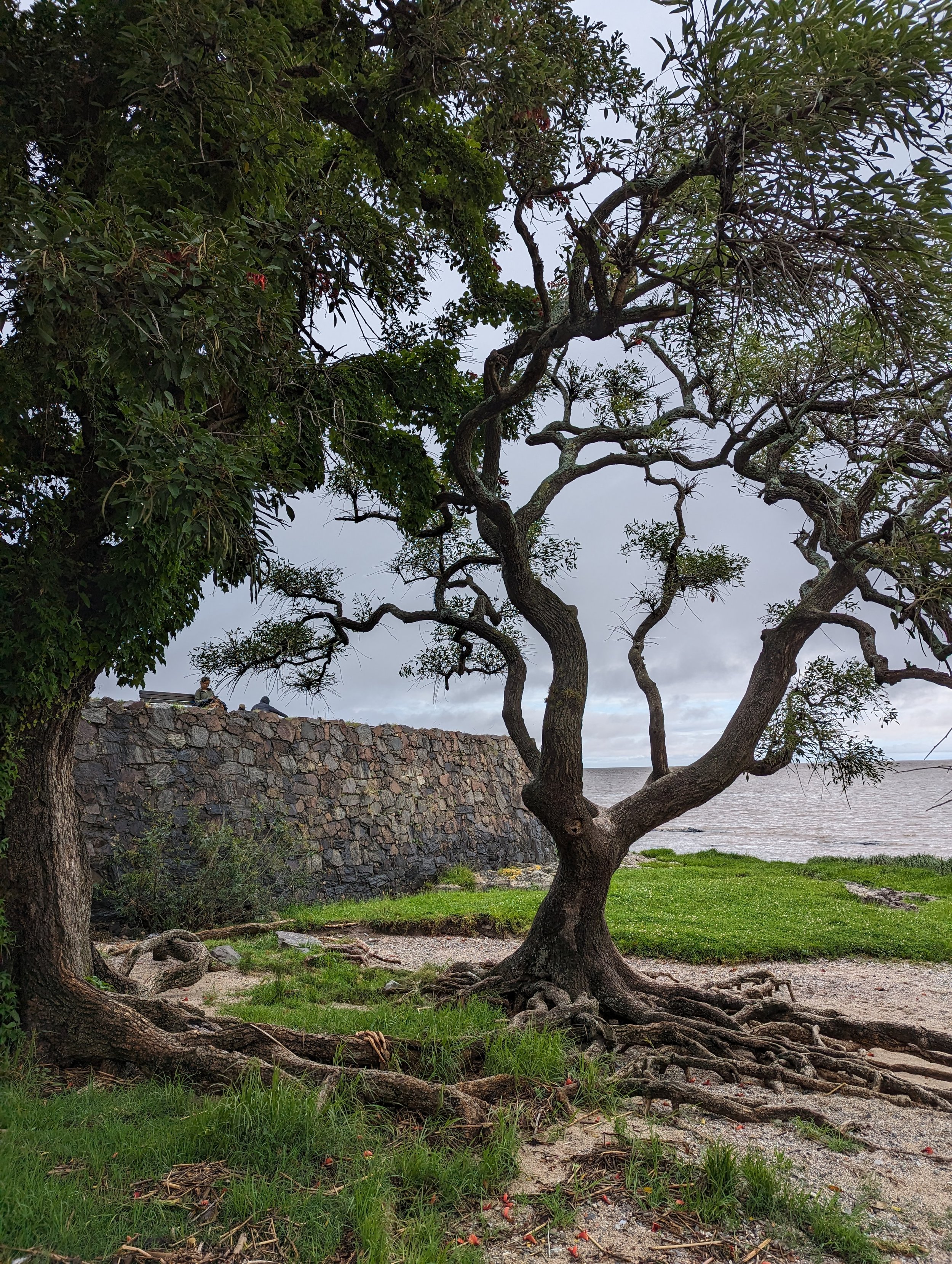

Day Eleven: Buenos Aires 2023: Colonia del Sacramento
Argentine bureaucracy is alive and well
We had to check in 1.5 hours before the ferry (which takes slightly less than two hours to cross to Colonia). Argentine migration loves a line: check in; security/TSA; outmigration for Argentina; immigration for Uruguay — and that’s just on the Argentina side, as we also had to go through migration and scanning machines on the Uruguay side. Whew!
Rainy day
I signed up for a walking tour and decided to take it in Spanish. The guide began the tour, but about five minutes in, a downpour started. We ducked under an awning, and she had a bus come pick us up, drive us around Colonia, and gave us a tour of all but the historic downtown. Somehow, I had expected a tour of the historic buildings. On the positive side, we got a good idea of the newer parts of town, the bullring that only served as a bullring for a few years and now houses concerts; the Sheraton; the old casino that drew folks from Buenos Aires back in the day, and the rambla along the coast of the river, where residents of Colonia usually gather to watch the sunset.
The bus dropped us at the historical area of town, and the guide disappeared. We were left to wander about on our own. I am sure Colonia is even more beautiful on a sunny day, but we had a wonderful time roaming the tiny town. After the noise and bustle of Buenos Aires, the bird song and quiet along the other side of the Rio de la Plata felt soothing.
Historical sites
I did not attack the historical sites in any order, choosing to wander around and discover unusual places. I found the rebuilt gate to the citadel, the lighthouse, the Street of Sighs, the big Portuguese style church at the top of the old town, the outside of the Azulejos museum (closed for renovation), the Franciscan convent ruins, the main plaza, the rambla along the river, the bastion de San Miguel along the river, the yacht club and pier, and archaeological digs below the sidewalk surface that had a protected cut-out area so you could see the original fort walls.
Food!
When the rain started in earnest, everyone headed for the nearest restaurant, Que Tupé!. I shared a meal with Mel and Cat: local fish, veggies, wine, and flan (of course). The cost of food in Uruguay more than doubled what we would have spent in Buenos Aires: $35 USD for lunch, instead of $6-15 USD.
Day Nine, Buenos Aires 2023: More street art, more dance classes and Gricel
A busy day!
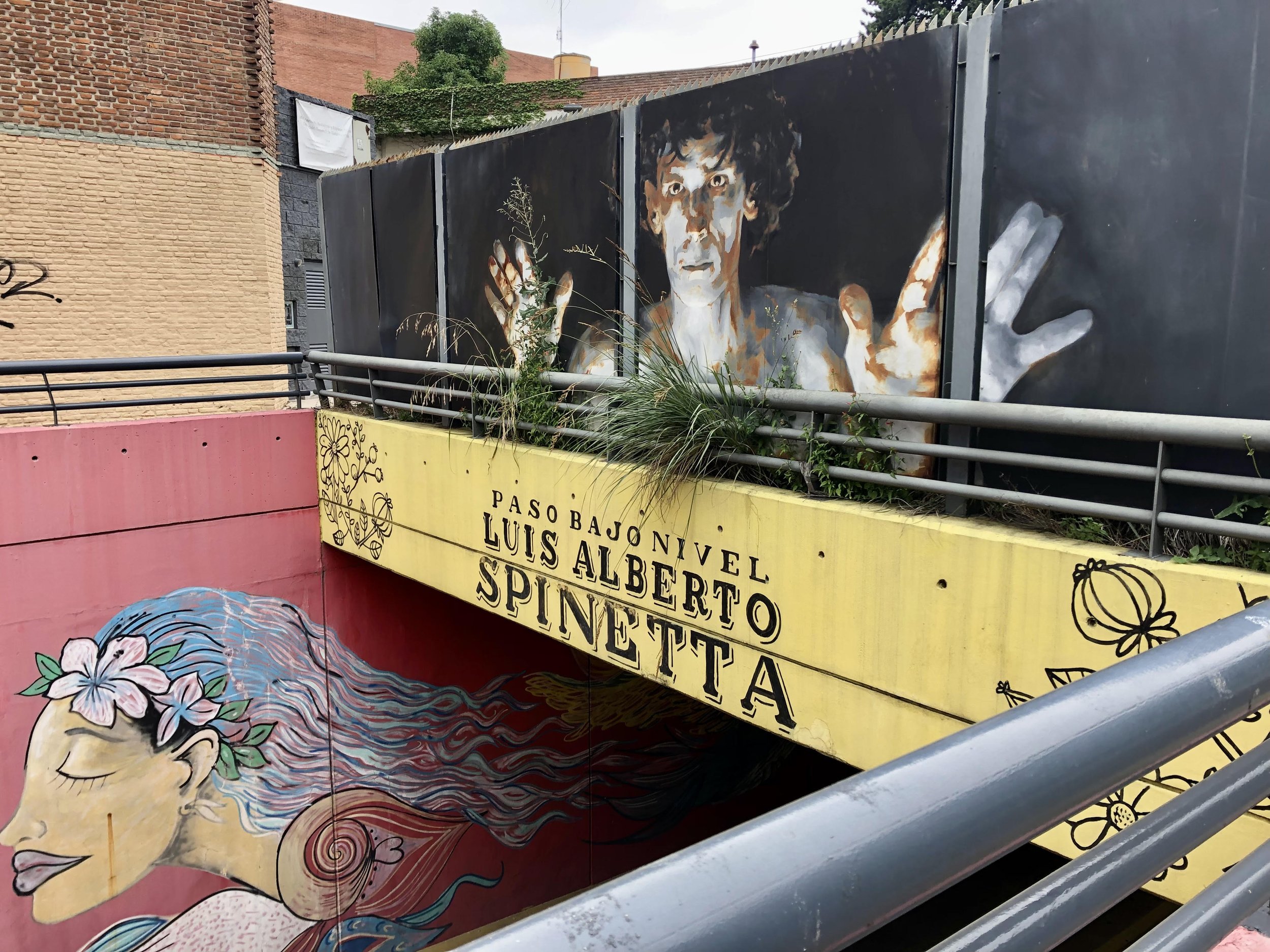
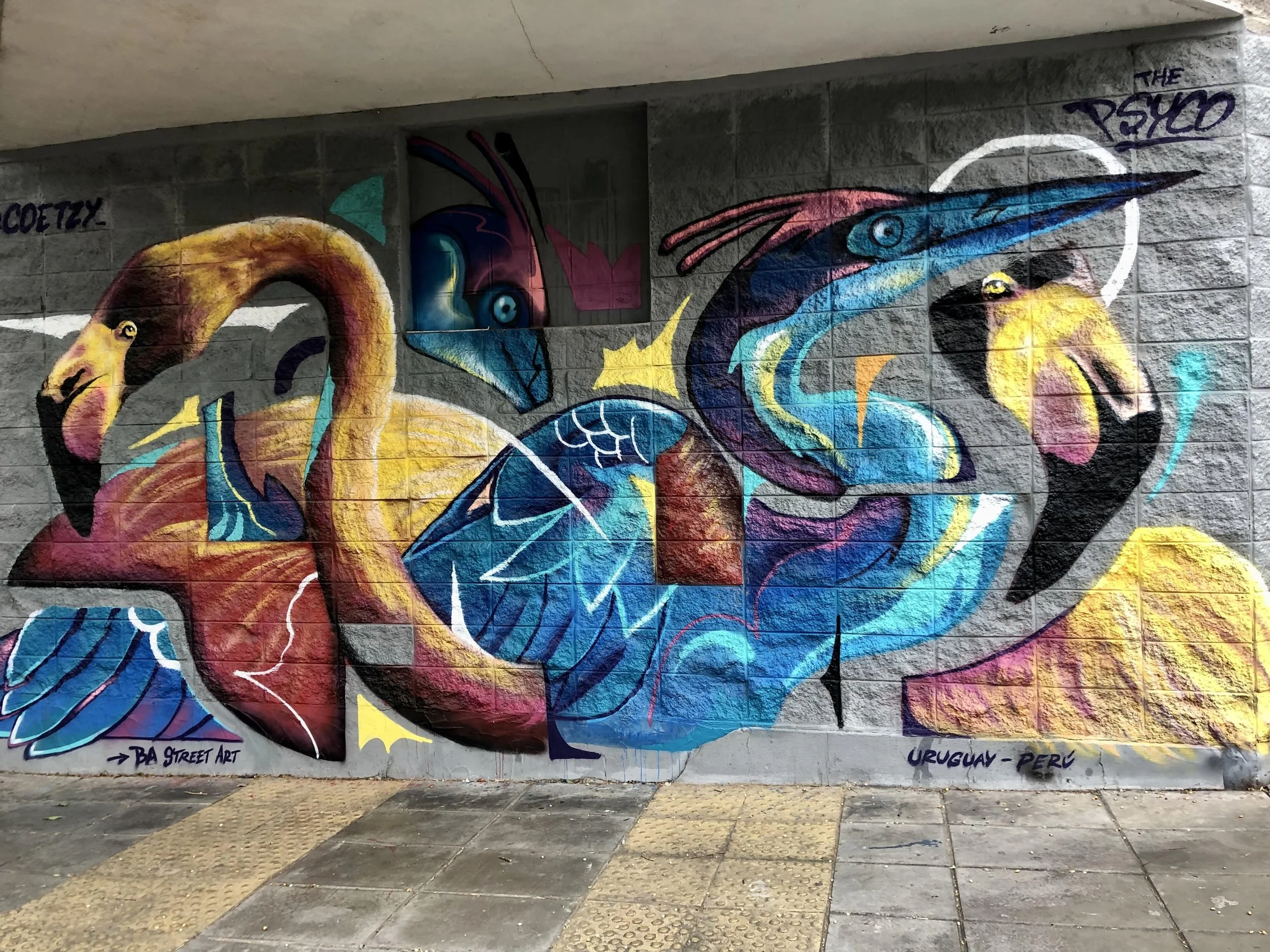
Street art everywhere
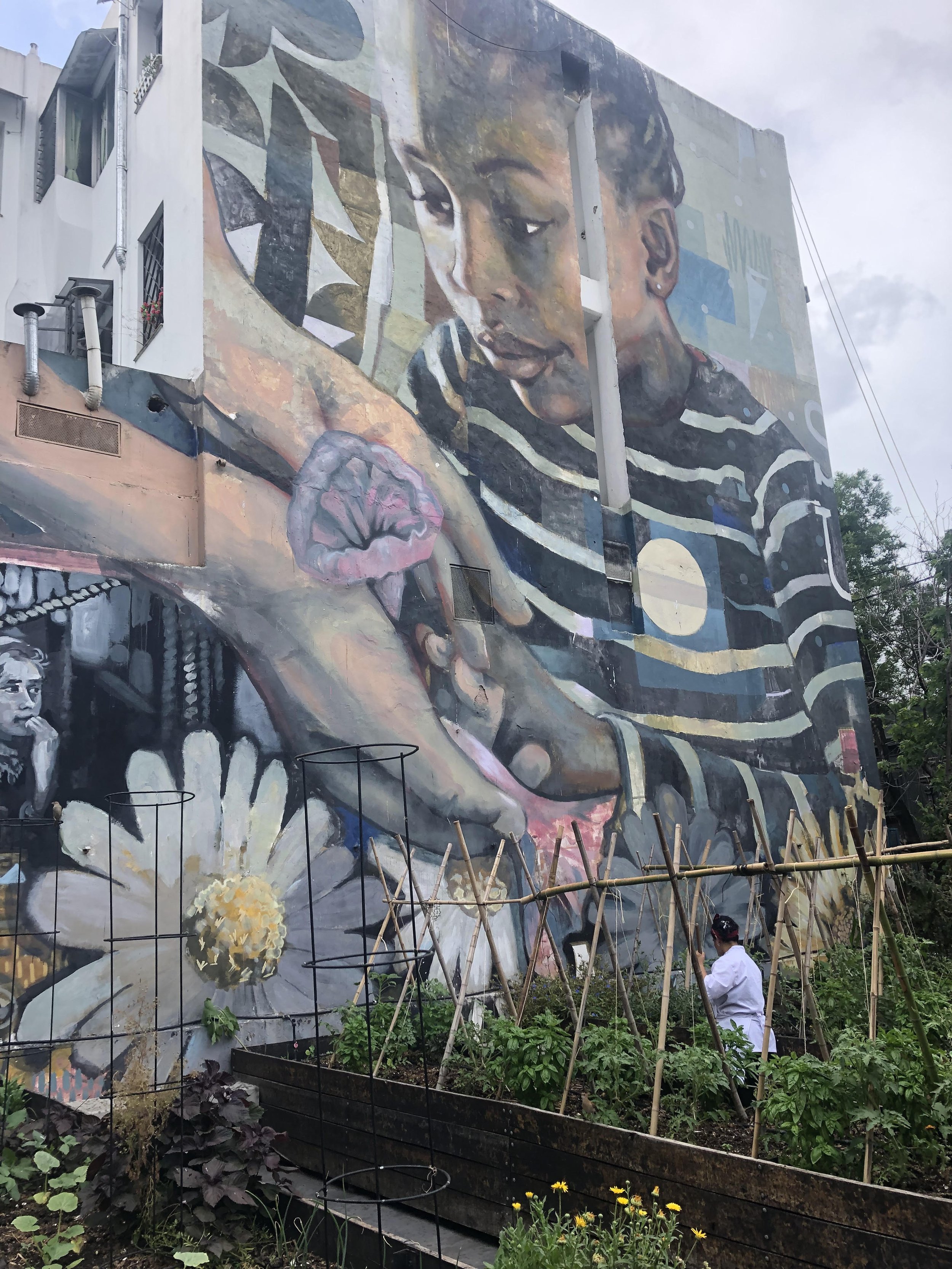
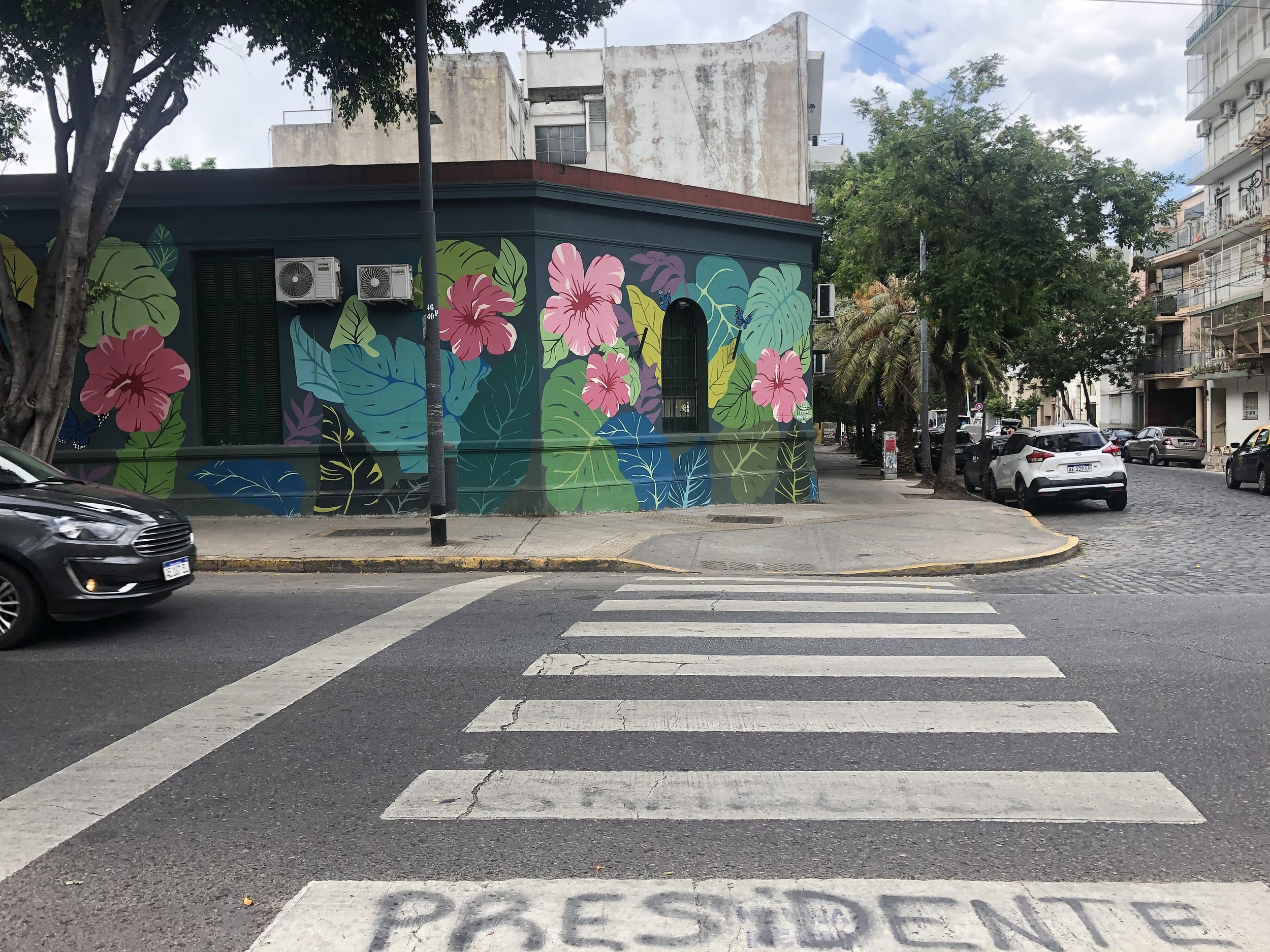
I think everyone on the tour has taken part in either a biking or walking street art tour. I have invited them to write about their favorites, and I will add in and update this as I get more from each person.


Dance classes

Monday night classes at El Motivo with Valencia Batiuk
Most of us are taking private lessons from various teachers, mostly Jose Garofalo and Valencia Batiuk. On top of that, some of us took the advanced class at El Motivo Monday; others showed up for the all-levels class.
I enjoy attending a class that makes me pay attention to details! Vale described the class as “Well, we teach an advanced class, but a lot of intermediates come. We don’t slow down for them, and they can do as well as they can.”
The class was huge and loud. I appreciated the help that we received from Valencia’s helper. As Luciana and Dina were out of town, the usual triumvirate was reduced to one person teaching. It felt great to dance moves I have not taught for years because of their difficulty. I am inspired to start teaching my advanced class again!

Part of our group at Gricel
Milonga review: Club Gricel, La Rioja 1180
We arrived in three chunks during the evening. One group misunderstood the reservation process and tried to reserve through the club instead of the organizer and ended up squashed into a corner. I reserved through WhatsApp and got a great seat. Cat and Mel showed up later; I don’t know if they had reservations, but they got a table near the bar. In the end Patrick and Sally coaxed better seating out of the host after waiting for a while as I suggested.
Tips to get better seats
Pro tip#1: Show up early: most organizers keep some tables free for last-minute arrivals. If you show up right at the beginning of an evening, you can often still get a seat.
Pro tip #2: Some people make reservations and then don’t show up. Different organizers have various ways of dealing with this, but usually, there is a cut-off time when unused reservations are then available to dancers who walk in. Wait until that cut-off time, and then ask nicely. You may get a better seat!

Club Gricel has been renovated and the dance floor is fabulous, if still hard to cabeceo down the length
Pro tip #3: Just make a reservation! Now that most organizers have WhatsApp, you can type in your request using Google Translate, and the old nightmare of telephoning in a foreign language is no longer a problem.
The male grapevine
I danced with two men who I already knew, but then the invitations to dance exploded. I had no idea that there is a regular male grapevine; how I didn’t know this is beyond me, since women always share opinions about how a dance went. One guy told me, “Oh I heard you were a really good dancer!” This is another advantage of speaking Spanish, as I only danced with Argentines, who apparently did not feel that foreign men needed to get in on the dance action.
New shoes
I wish I had not worn new shoes! I should have brought two pairs with me, but I felt lazy and packed one. My feet gave out after 2.5 hours of solid tandas. I knew that I would not be able to dance the next night if I continued. A younger me would have ignored that, but the voice of reason won, and I went home with the early risers in our group.
Day Eight, Buenos Aires 2023: Street Fair, El Beso and FIESTA!

The current tango tour group are mostly world travelers, so we have done extraordinarily little in a group of ten. Today was no different.
It rained most of the day: I have never had such a rainy December in Buenos Aires! We split up in the morning. Some visited the street fairs (San Telmo and Recoleta and Palermo). I will add photos here as people send them to me. Others took tango lessons. The valiant late-night (oh, is it after 3 am already? Cat I am looking at you!) were up and about as well.
Milonga review: La Rosa Milonga at El Beso, Riobamba 416

La Rosa is a new organizer. She is young, energetic, organized, and ran the milonga with an iron hand. Every half hour or so, she stopped the DJ and demanded everyone move over to make room for new people, scolding folks for holding onto seats. I have never seen that before!
Denise, Ed, Scott, Sally, Cat, and I went to El Beso. It was crowded with all ages, dancers from a dozen countries, and good music. On the best of days, El Beso is tricky for new leaders, as the room has a column ALMOST in the middle of the dance floor, which creates strange traffic issues. I was proud of the guys for jumping into the fray and holding their own. Everyone is getting better at cabeceo.
Parrilla!
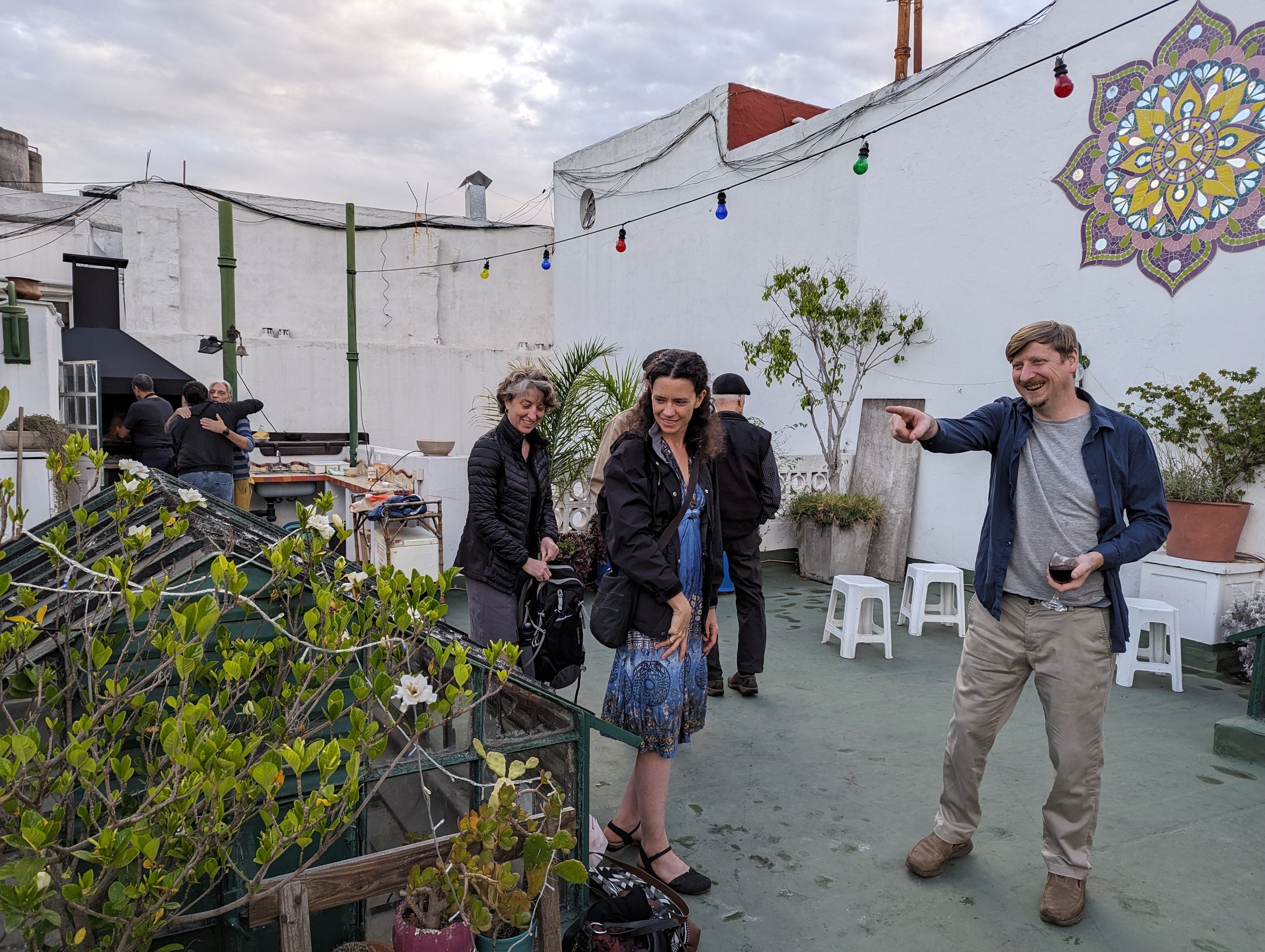
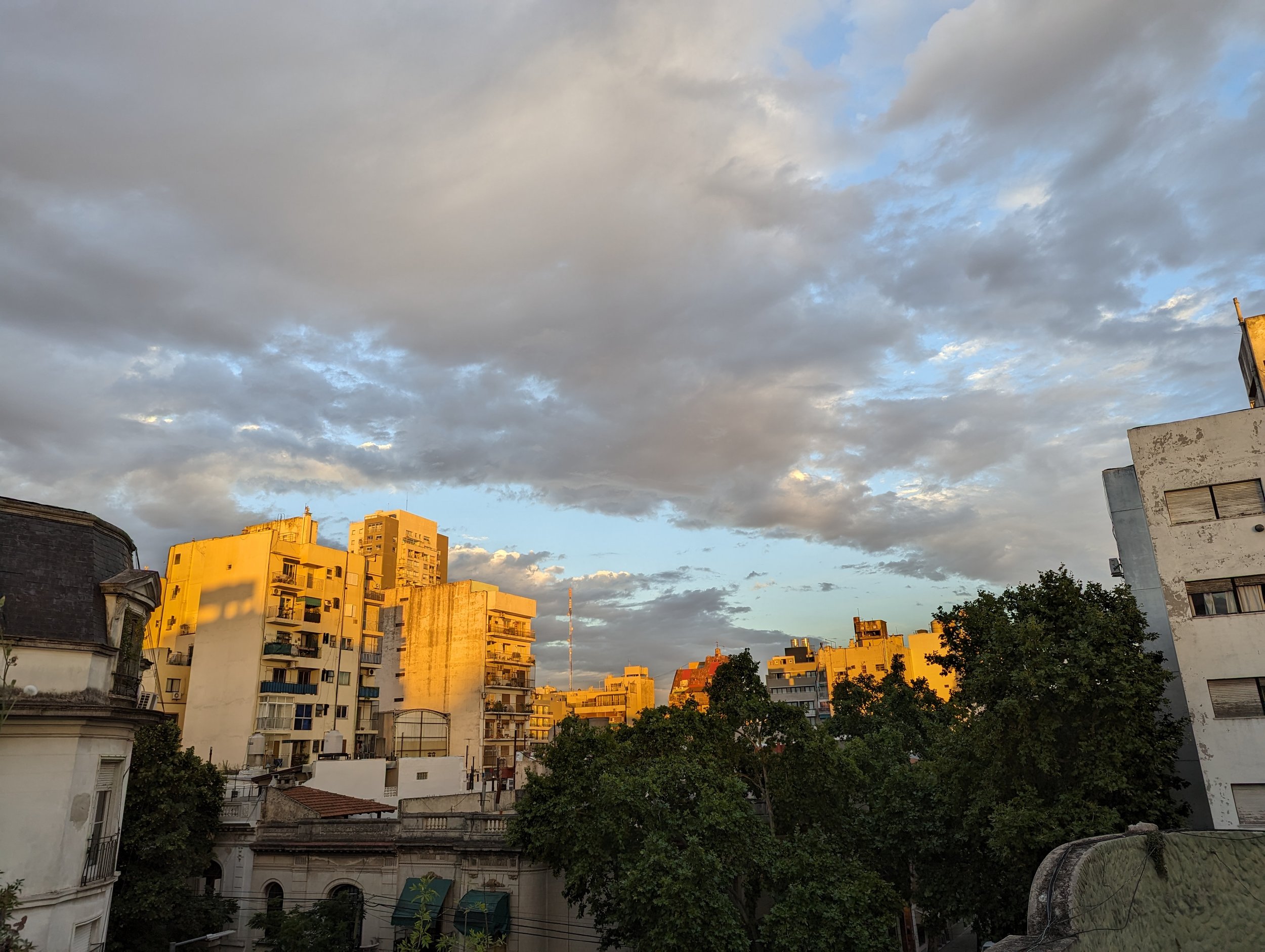
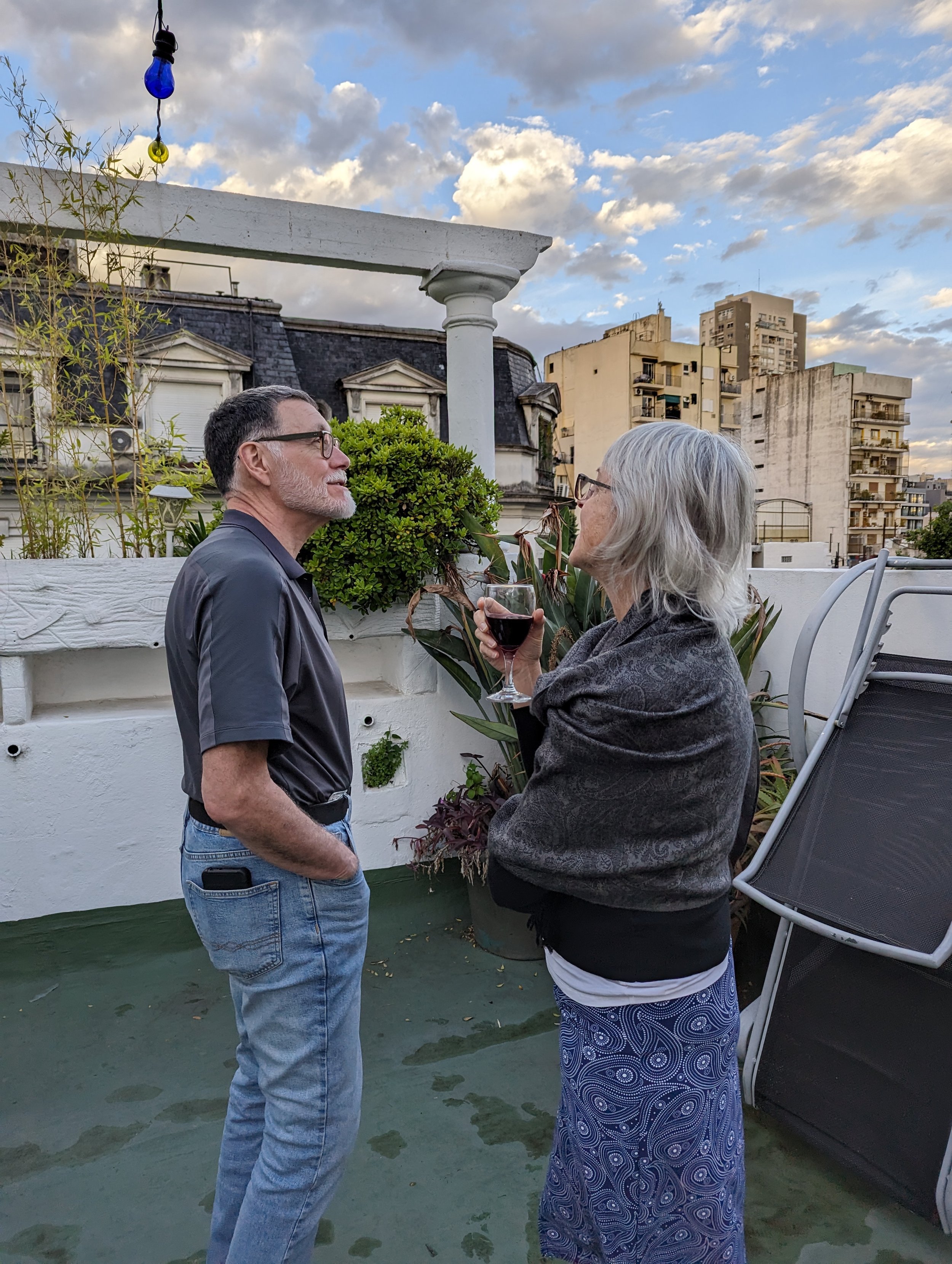
The rain stopped a few hours before the big fiesta, and the weather warmed up enough to eat al fresco outside on the terrace, rather than inside.
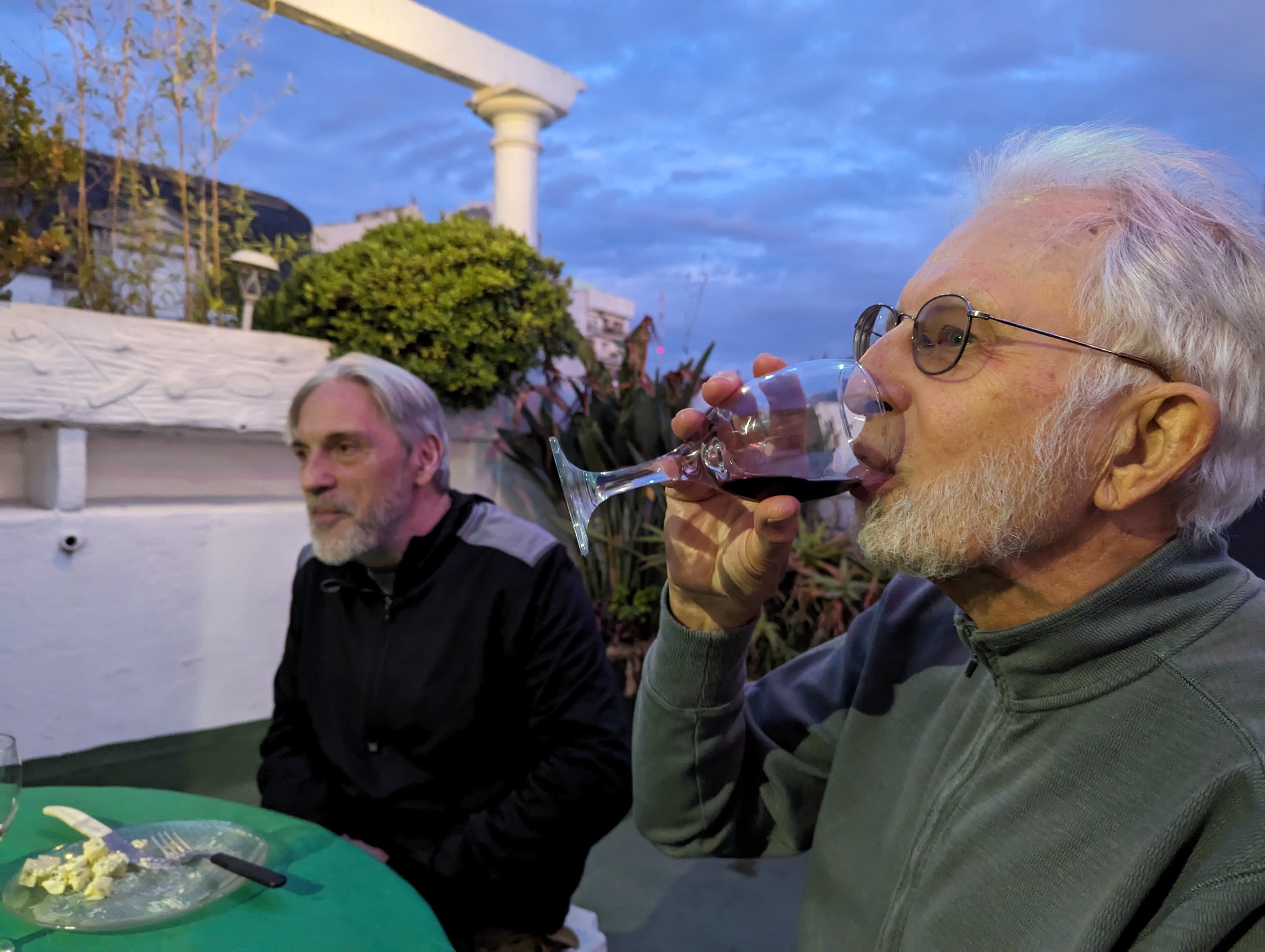
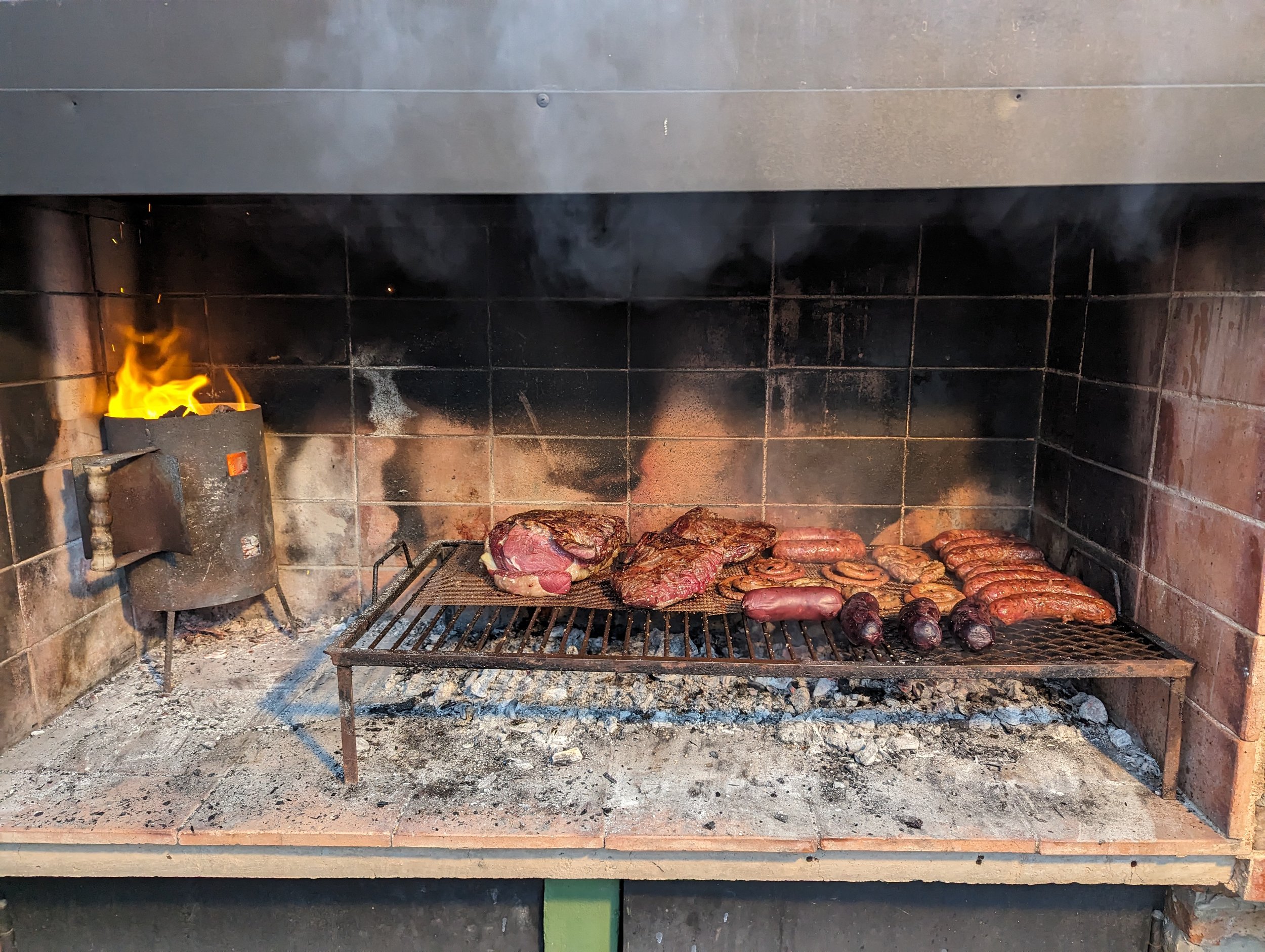
Jesus Pietropaulo, a friend of Jose’s, was our chef as we partied on the rooftop of La Maleva. We devoured everything he brought to the table; a few decided the blood sausage was not their thing, but other hungry folk tucked it in between the chinchulines (intestines), chorizo (sausage), bife de lomo (beef tenderloin) and bife de chorizo (sirloin or NY strip steak if I am correct). On top of that, there was bread, potato salad with enough garlic to make my son die of happiness, tossed salad, more wine, and ice cream and champagne punch for dessert.
The food was marvelous, and Jesus quipped, “Look! They are drinking like argentinos!” which I think was a compliment. Twelve hours later, I was not hungry at breakfast, so that is the sign of a feast! For me, this was a highlight of the tour.
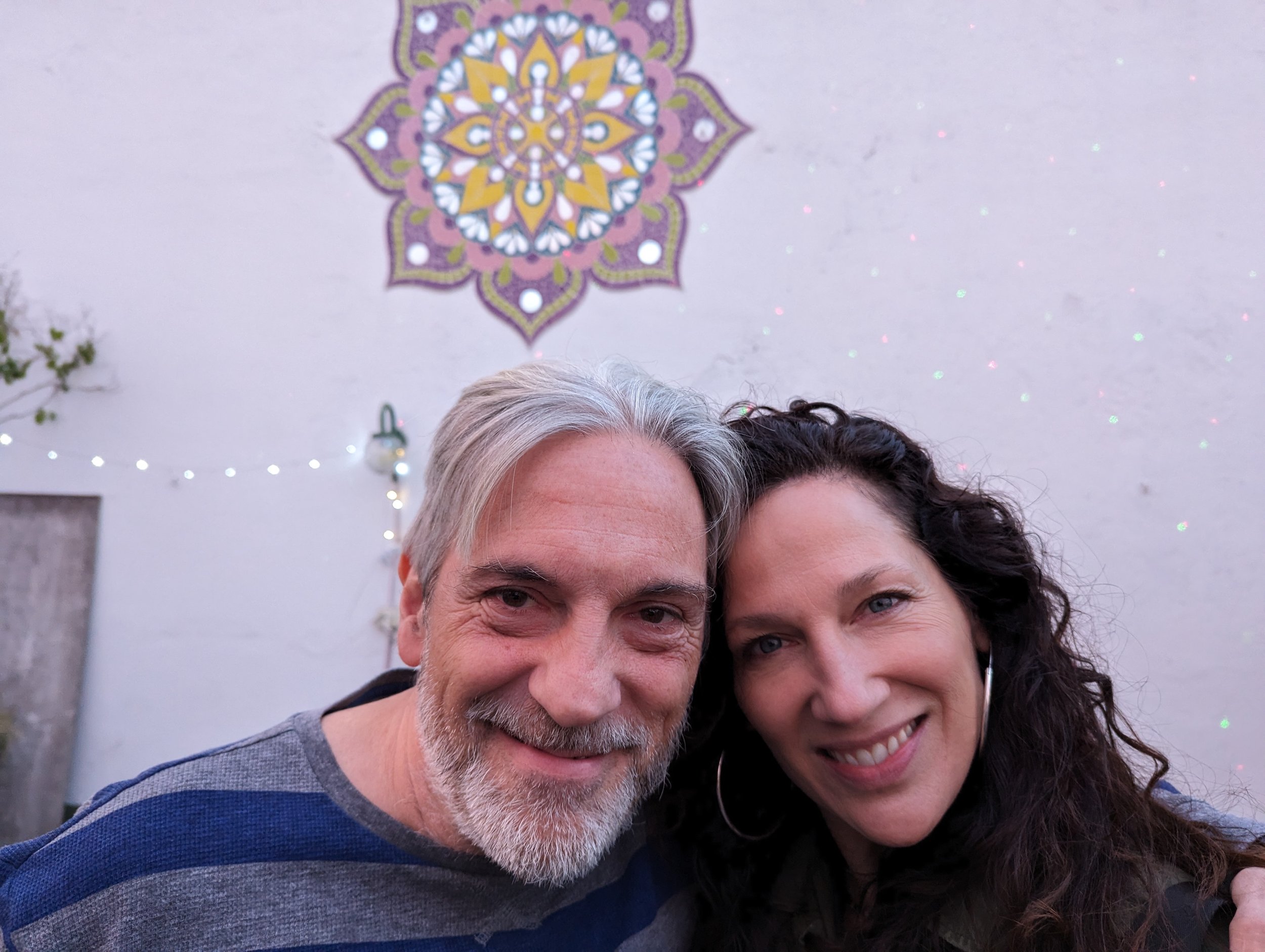
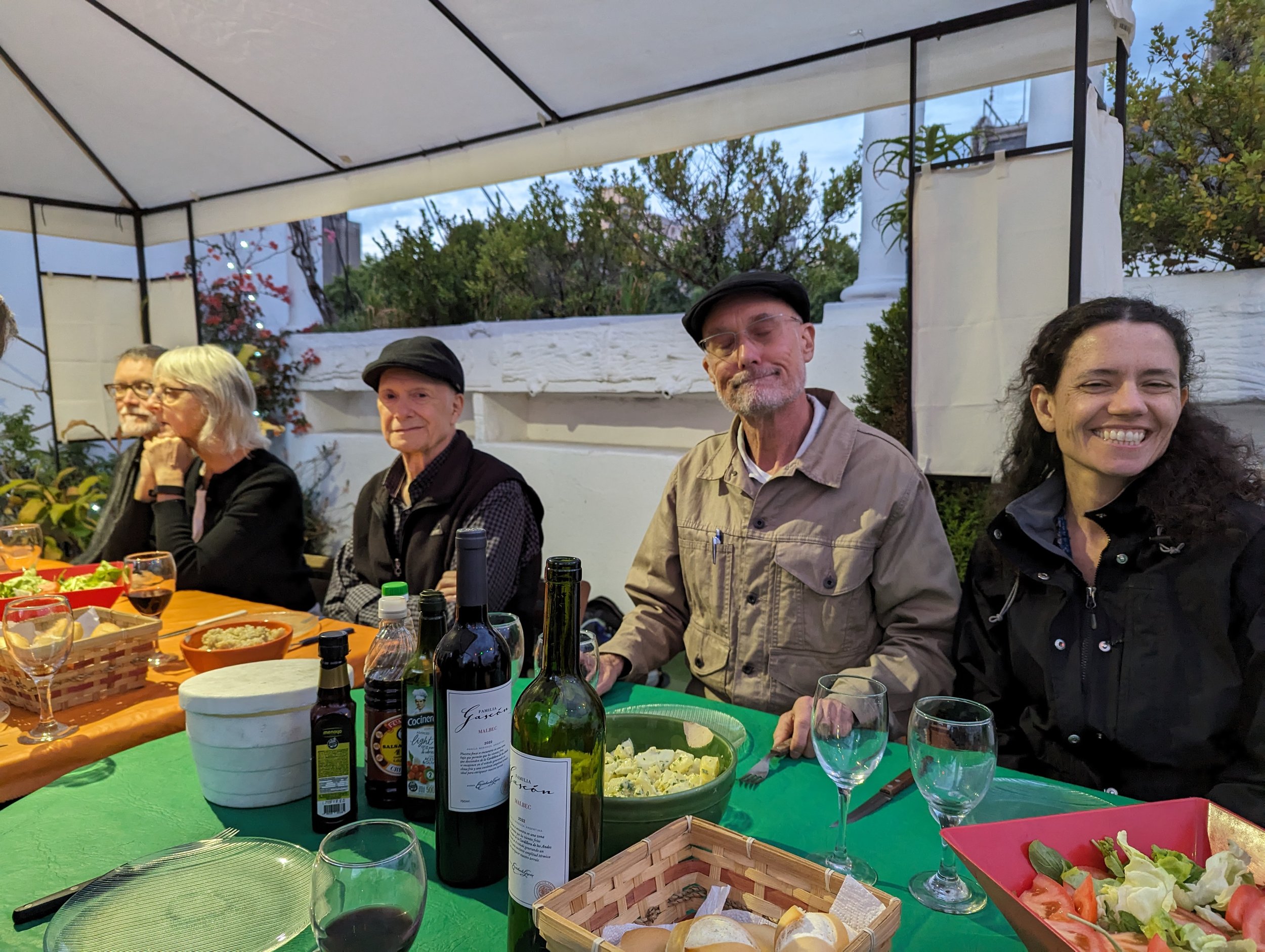
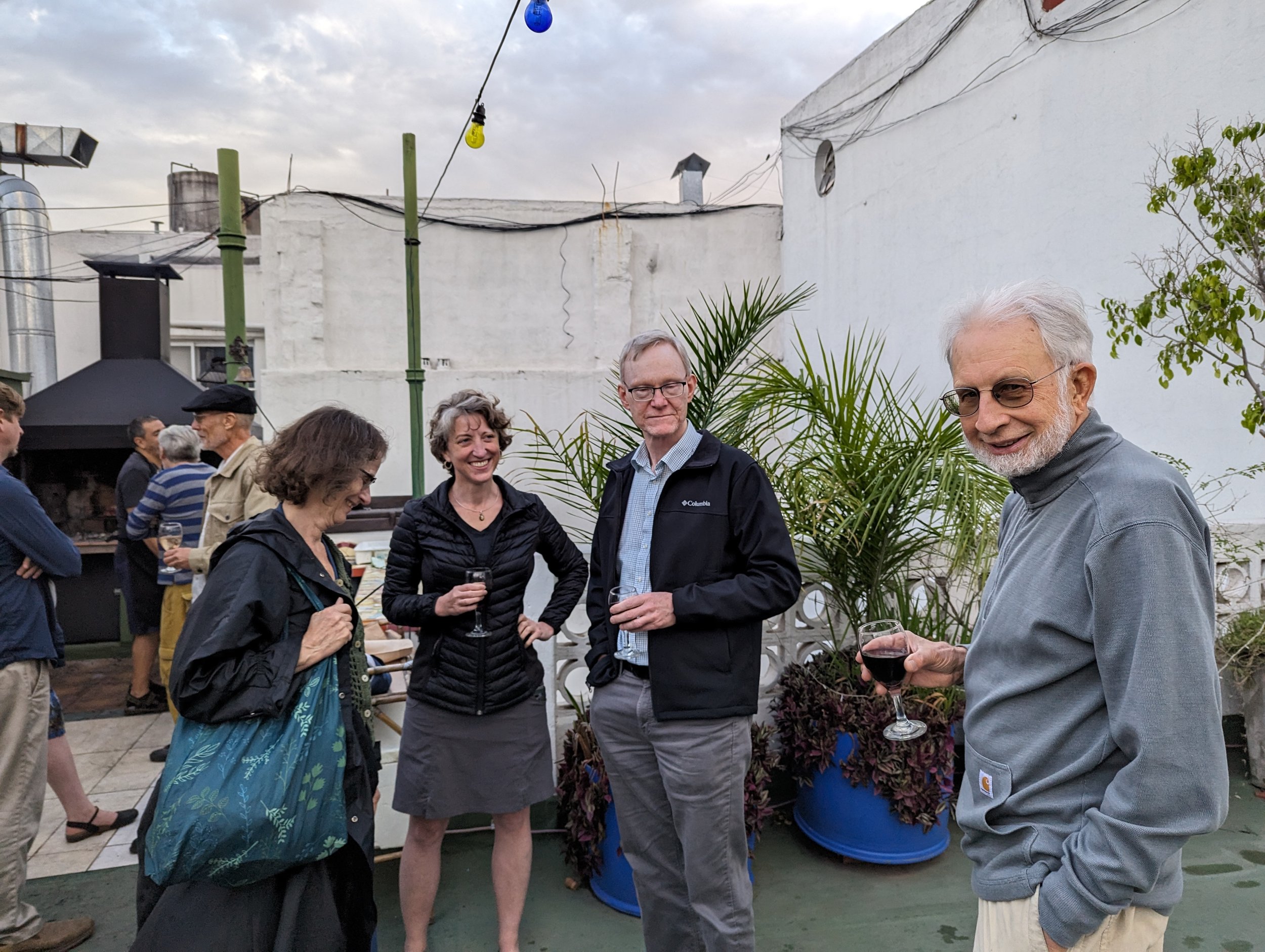
You can enjoy the sunset, the meat, and the party atmosphere with us in the pictures below:
Day Seven, Buenos Aires 2023: Chacarita, Fine Arts, Candombe
Chacarita and Carlos Gardel’s grave
Saturday started with a visit to Chacarita cemetery. It was a beautiful day, warm and sunny. There were forays to find Pugliese’s grave and we found a d’Arienzo, but not the right one!
On a somber note, a lot of the plaques were missing from mausoleums. I spoke with a passerby who volunteered the following information: in the past five years or so, thieves have been plundering the cemetery for brass and copper to sell. The only reason Carlos Gardel’s grave is untouched is that there is a full-time guard! They put up cameras to try to figure out what was happening. Slender-armed women could reach through the grates into the mausoleums and steal things from there. When it came to stealing plaques, which would cause a bit of noise, and should have alerted the workers, they found that about 50% of the theft was by employees!

Museo Nacional de Bellas Artes
Museo Nacional de Bellas Artes
The group split up and I shared a taxi to the fine arts museum before wandering off solo; my favorite way to do museums. I will add more photos as others share their visits with me. As usual, I found other people interested in fiber!
17th Festival of Candombe
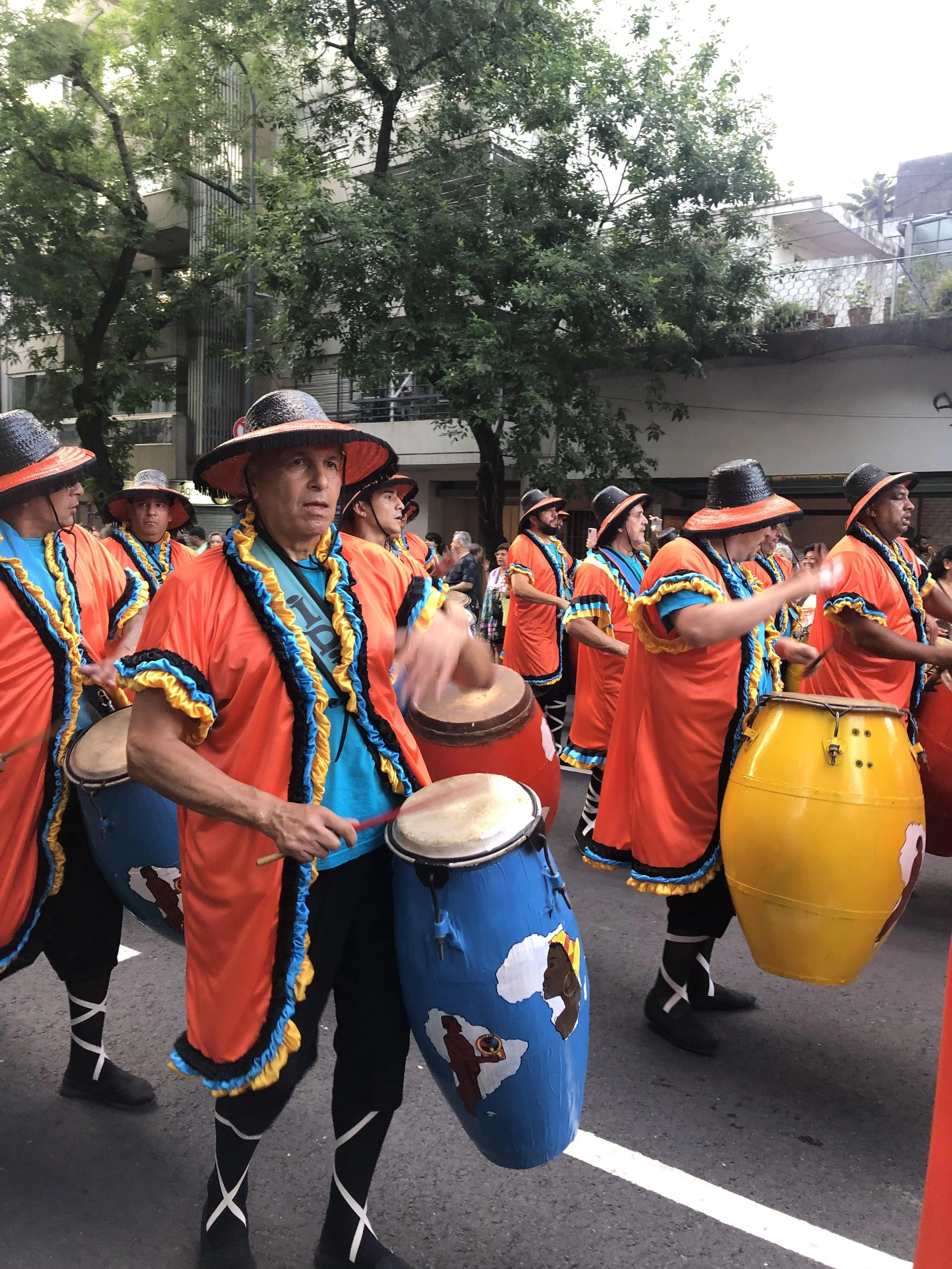
I saw a flyer on Facebook while looking for the address of an open air milonga and discovered that there was going to be a candombe festival. For those of you who are not familiar with candombe, it is a dance that evolved in the mid-1800s from Afro-Argentine dance styles with Afro-Cuban influences. Milonga grew out of candombe, and tango from milonga (with other elements of course).
I took the bus from Palermo, and when it veered off course, asked two women who were obviously headed for the festival if they were going. We got off the bus together and made our way to the parade (the bus was blocked because of the parade but the driver didn’t tell anyone what was happening!). They were part of a group who were cleaning up after the parade and recycling all the trash! Their costumes were recycled/found objects too: a great idea!
Of course, the parade started about 1.5 hours late, which gave our group time to eat and wander around Parque Lezama. I bought an ice cream, and the store owner said the parade would go until 11 PM! We didn’t last that long, but the drumming had people dancing along with the bands. Each band had to stay at least a block apart because of the sound levels.
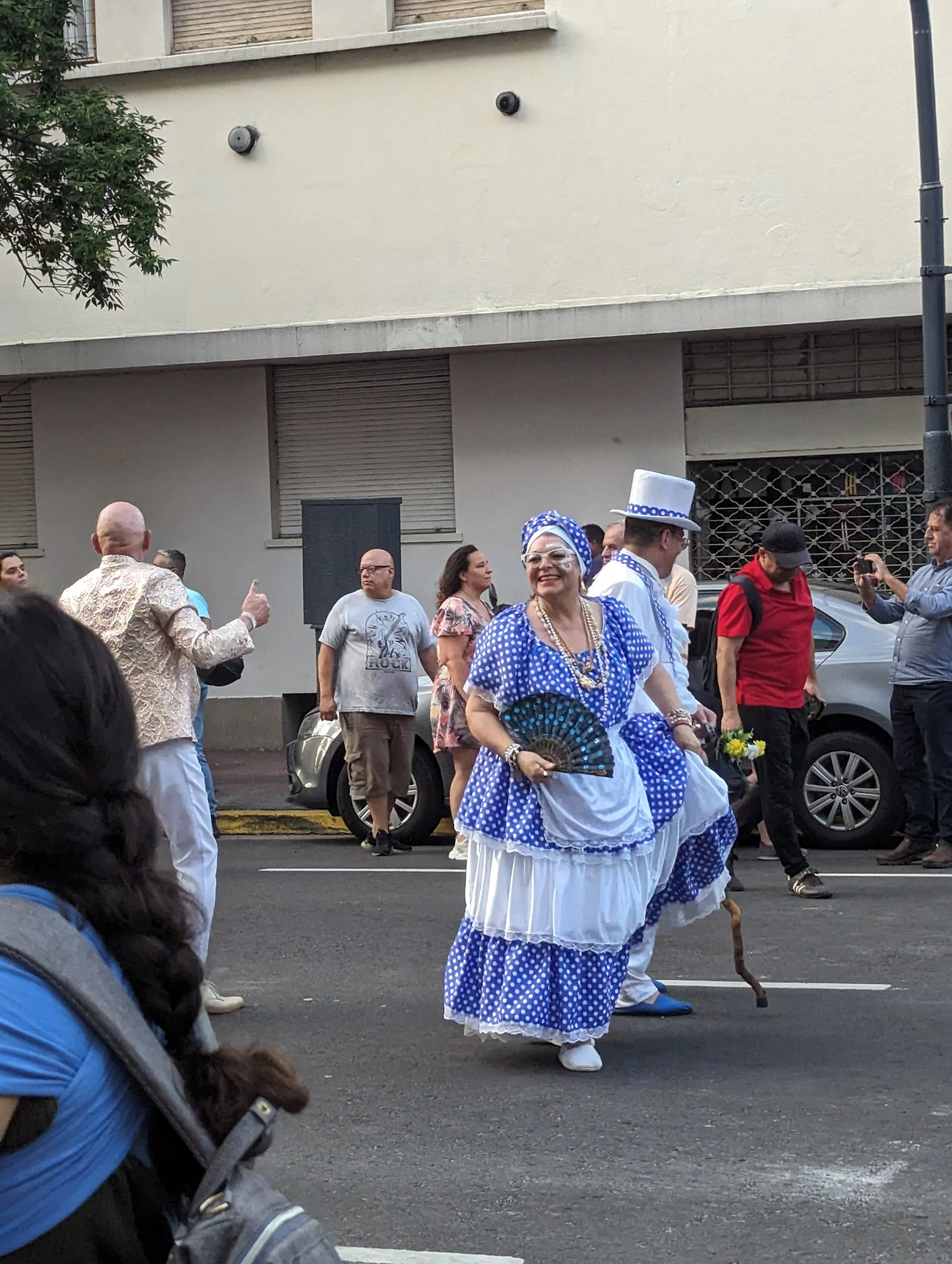
A cheerful candombera in the parade

Carlos Gardel’s statue and grave in Chacarita
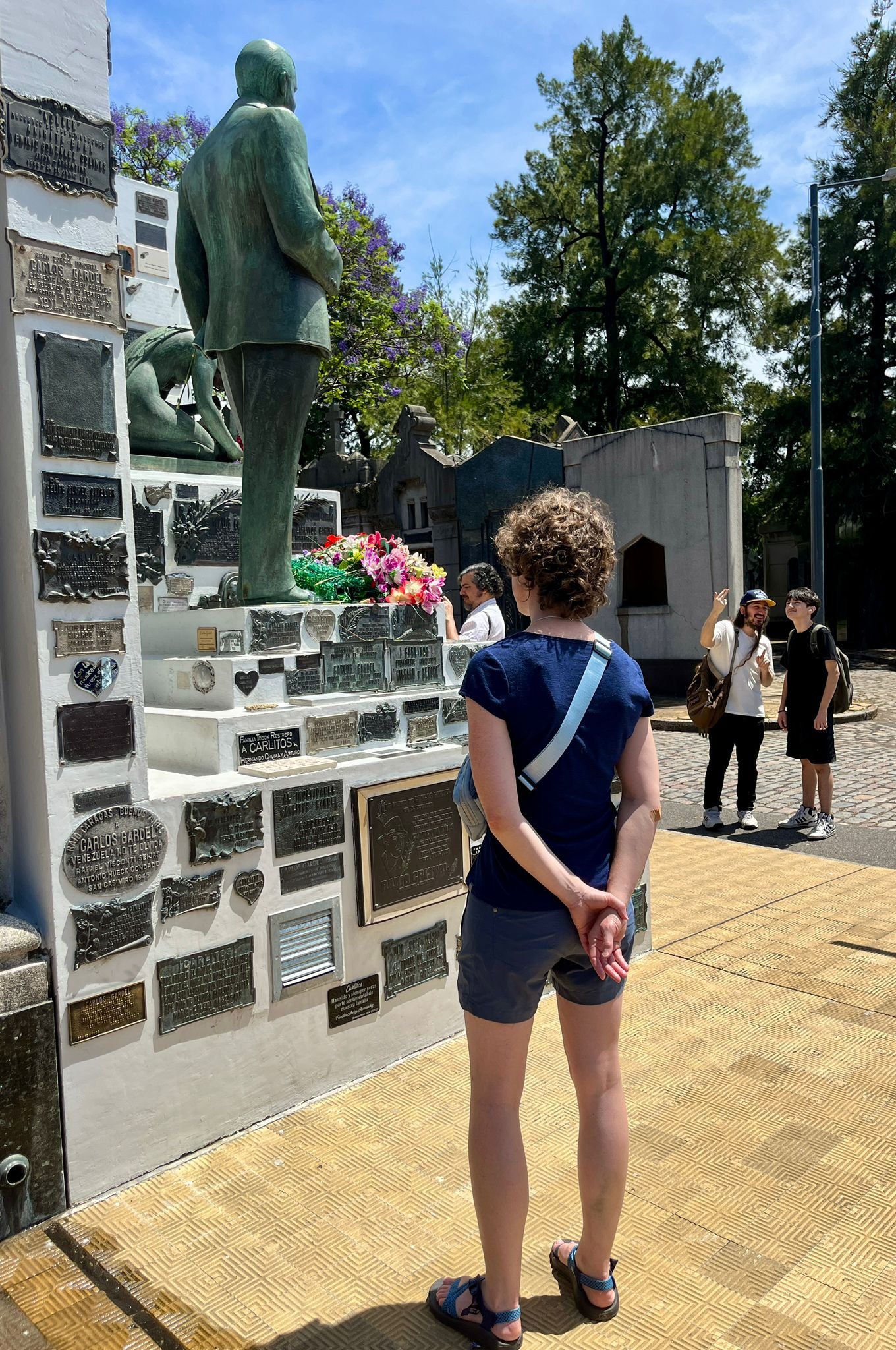
Nanette at Carlos Gardel’s grave

I find knitters everywhere!


Candombe festival in San Telmo
Restaurant review: Peruvian food: Mamani San Telmo (Defensa 873)
I ate dinner with two other tour members who had found the #1 rated Peruvian restaurant in Buenos Aires. We felt a bit nervous when we found we were the only customers (was this restaurant really good?) but sat down and ordered. By the time we left, it was packed, and for good reason. There was almost no ambiance, but the amount and tastiness of the food made up for that lack.
The ceviche was amazing. And Cat and I drank a ridiculous amount of passion fruit juice. Be aware that when they say portions are to share, they are SERIOUS about it: three hungry people could not finish two entrees. Take a group!

In Barracas, scenes from the docks on the Riochuelo. The artist, Alfredo Segatori, lives here too: his door is on the right!
Day Six, Buenos Aires 2023: Biking in the rain
Urban Art and Graffiti tour
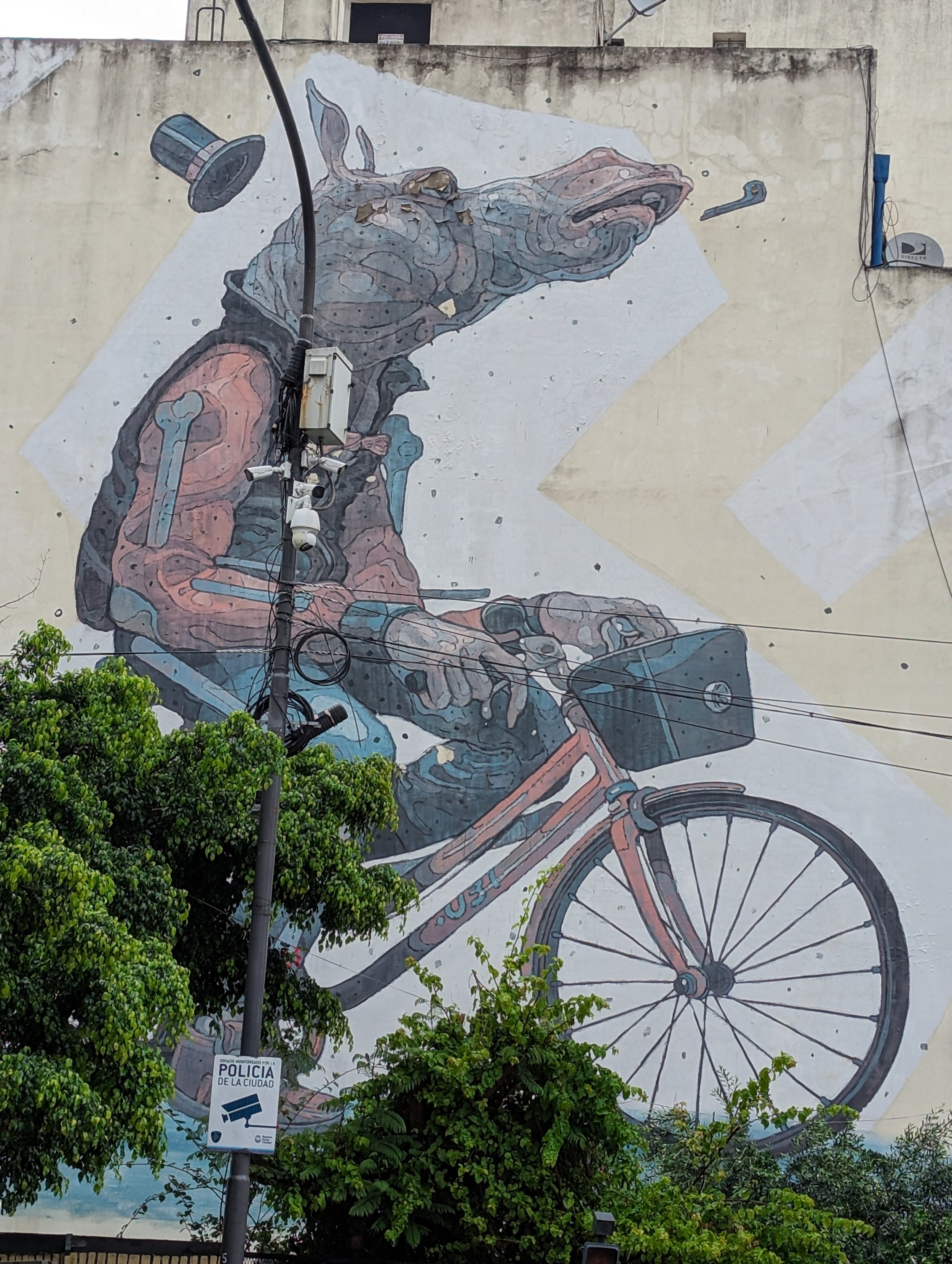
Paint by number biker hippo in San Telmo
Biking Buenos Aires did not disappoint yet again. Each time I have taken a tour to Buenos Aires, I have biked on at least one of their tours. Most of the tour guides are expats from North and South America. The guides are always interesting people, and enthusiastic about what they do.
The weather did not cooperate at all with our plan. We arrived in a downpour, having tried to rebook for another day and being told that they ride rain or shine. Three of us plus our guides headed out in alternating drizzle and downpour to learn about graffiti and see street art in Barracas, San Telmo and La Boca. After a certain point, you are so wet that more rain does not matter!
I admit that I cannot remember everything the tour guide told us about the various artists. He teaches art, and dove into each subject with much enthusiasm and detail.
Street art adapts to its environs

3D street art honoring the homeless
The hippo on the bike mural is next to a school and so the artist modified his style to a gentler style. I like how the painting is done as if it is paint-by-number, and how the bones can be seen. The .031 on the bike frame stems from an agreement with a graffitti artist who kept tagging the mural each night: that’s his tag but incorporated into the wall to stop him from defacing it!
Art reflects the society around it
The 3D sculpture of a man is new. The artist is adding these around Buenos Aires, commenting on the homelessness in the city. Each one is numbered and signed. Our guide had heard there was a new one, so we got to see it for the first time along with him.

Graffiti lesson: #2 Pasteup
Is graffiti art?
We learned about various kinds of graffiti as well as street art. I didn’t know there were distinctive styles even though I have seen graffiti for decades. I was being snobby about it not being art. This bike tour changed my mind. I can appreciate paste up and the fancier street art. I am adjusting to the idea that tagging things is art :-) The paste up intrigues me the most. It is a way to share your opinions and your art skills all over the city!
We biked around, looking at different murals. Many of the older ones, like the hippo, are faded and the colors are less intense. New murals are much brighter. We saw murals done in black and white; realistic and very cubistic side-by-side.
Barracas: Pasaje Lanin
I had never been to Barracas before. It’s next to La Boca on the Riochuelo, and there are few tourist sites or milongas there.
We turned left out of a typically grey/brown landscape in the rain, into a brightly decorated street! Pasaje or Calle Lanin, is the home of the artist Marino Santa María. He decorated his house, and then one by one, decorated those of his neighbors. He started with paint but added in mosaics as the budget allowed. Each is different, each is splendid.
The artist was in his house, sipping mate, and waved to us out the window. I liked that the tour guides both knew him and obviously respected his privacy. I wish my entire house looked like this street!!
Huge mural!
Alfredo Segatori painted the largest mural in the world (now #2) on the wall that his house door inhabits, in Barracas on the edge of La Boca. I could not believe how huge it was! There is a portrait of his wife with a cooking knife next to their door. There are portraits of local people as part of the mural. There are scenes commemorating the dock work in Barracas and La Boca. It is just huge!
Walking street art tour
Many of the tour’s participants took a walking art tour. As soon as I can convince one of them to write a review, you will see it here!

Pasaje Lanin: the green and blue house belongs to the artist, who waved to us from his window.
Day Five, Buenos Aires 2023: El Ateneo, Teatro Colon and Recoleta
We accomplished a lot today! I left the house before 10 am and got home around 6 PM.
El Ateneo Gran Splendid

Sally and Tom hit the Gran Splendid for some books.
I grew up with a librarian parent, so I have always loved books and bookstores. We found a guidebook to Buenos Aires in English for Tom, graphic novels for presents, and a trash novel in Spanish for me to read on the plane. The Argentines are serious about their books, and the publishing industry here is strong despite the ubiquity of cell phones and other ways to find information.
Five of us ran into another two of our group entering as we left: a bunch of reading enthusiasts!
Teatro Colon

The main foyer of Teatro Colon with its lofty, sumptuous beauty
Teatro Colon is always a joy. You can see how the upper class around the turn of the 20th century took their European roots seriously. The Argentine-Italian upper class were the movers and shakers for the construction of a world-class opera house. No surprise that Italian (and other European) marble was imported to create this space.
Did you know they went through three architects before the building finished? Two died: would YOU have taken on that job?
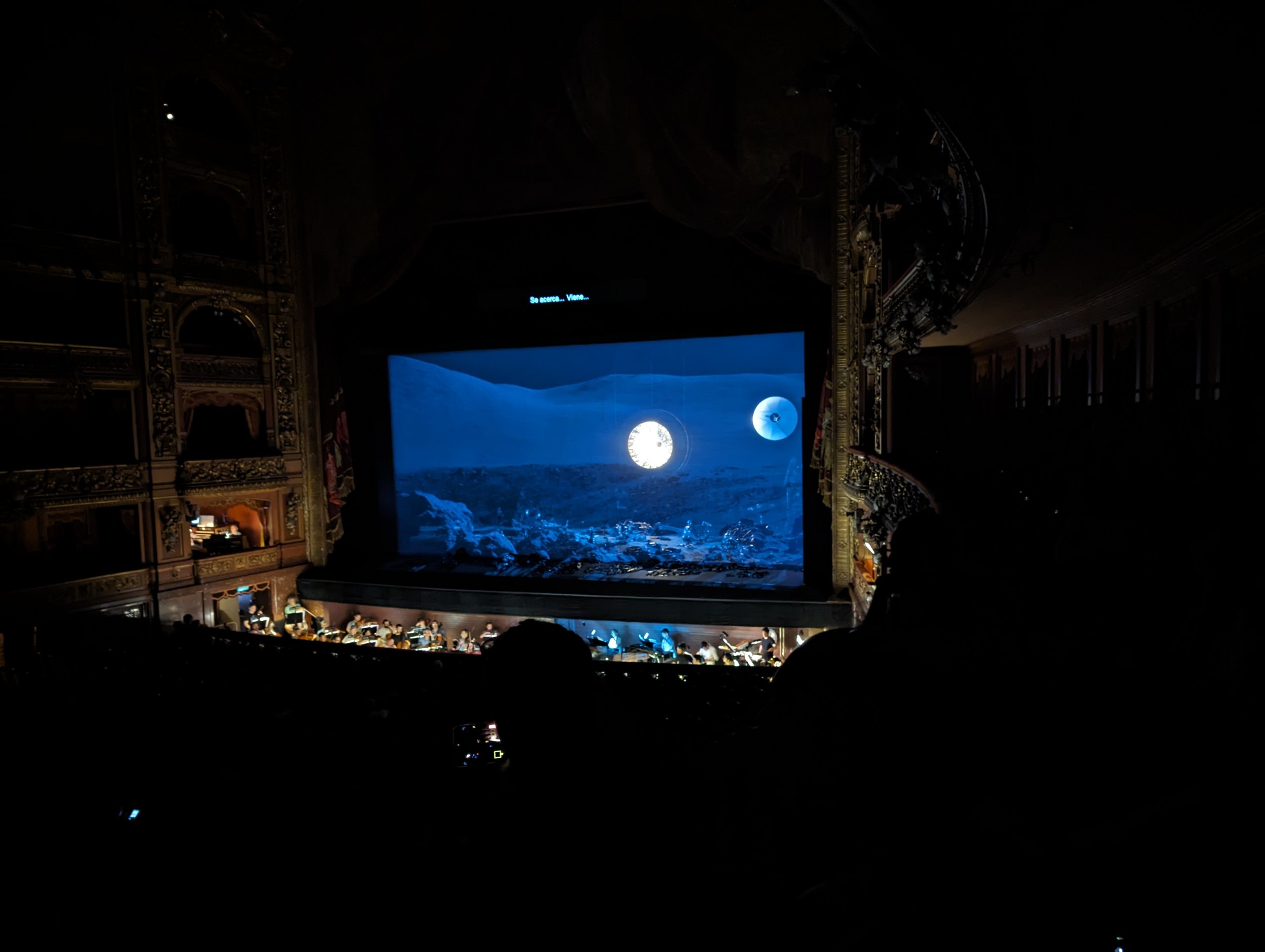
La Cuidad Ausente in rehearsal
I took the tour of Teatro Colon a decade ago when the restoration was completed. It was great to be there again, ESPECIALLY because they were rehearsing the opera that most of the group plans to see Tuesday night: La Cuidad Ausente. It was described as a post-apocalyptic sci-fi opera. The stage was littered with scrap metal and garbage, two people were scavenging for items. Huge metal discs hovered above the stage, and the soprano’s eerie, ethereal voice rang out from somewhere. We weren’t allowed to talk, as the rehearsal was in full swing, but WOW!

I changed my mind and tried to get a ticket, but it was sold out.
Recoleta Cemetery
I go to Recoleta every visit to Buenos Aires. I don’t know why I feel so drawn to Recoleta and not as much to Chacarita, but there it is. I try to find new tombs each time and to notice different things, rather than just hitting my favorite spots.
Getting around
After many years of walking, taking the subway and grabbing taxis, I am back to my old ways of taking the bus. Now that the routes are on Google, I no longer need to carry a large spiral map with me to figure out what bus to take!
Day Four, Buenos Aires 2023: Lo de Celia
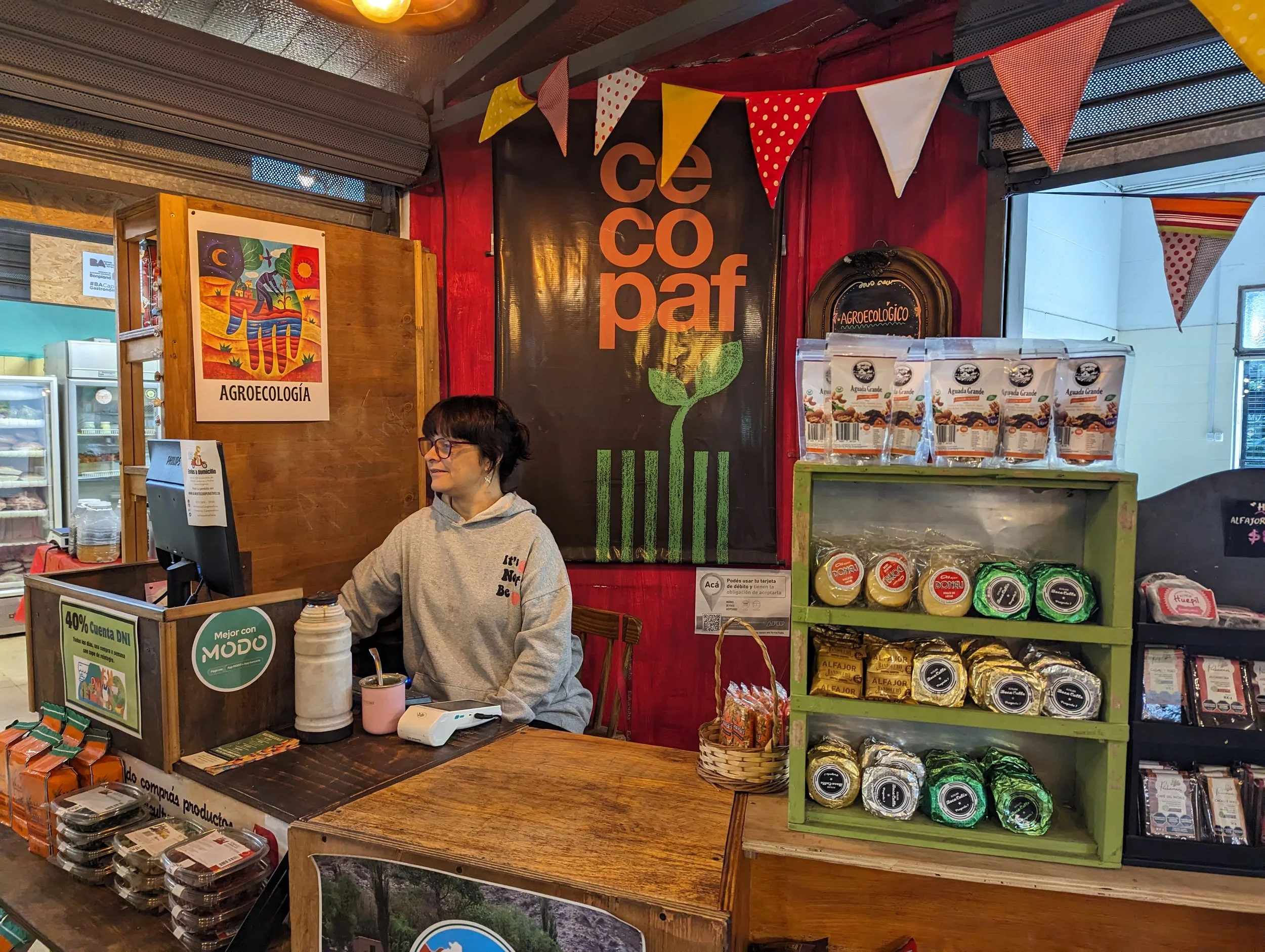
Mate? Yes! Dulce de leche? Yes! Spices? Yes! All from the cooperative running the stall
Solidarity Market (Bonpland 1660)
Tuesday started with a quick run to the Solidarity Market to get my favorite brand of mate. I also found goat dulce de leche, which my family prefers, and local honey. Wow! I didn’t know this market existed, but it’s been there for 18 years. I met Claudio, who sold me a natural indigo-dyed scarf. I found out he and his wife are SPINNERS! This is my alternate, non-tango world, se we chatted about spinning wheels, natural fibers and natural dyes. I promised to get back to bring my drop spindle.
Next, I trotted back to my neighborhood to begin settling in the three people who arrived in the morning. Two could not get into their BnBs yet, so we stowed luggage at my place, exchanged money and hit a cafe.

Cafe review: Kaldi (Nicaragua 4604)
Kaldi, situated around the corner from my BnB, because our meeting place for the group. The owner was super nice and appreciated all the business, providing a relaxed place for morning coffee and planning.
Kaldi has a variety of sweets as well as an imaginative coffee list. I had an affogato with ice cream in my espresso, a habit I acquired in Portland at Caffe Umbria. They even had one gluten-free option for a sweet. Ask Patrick about his new mate habit (also available at the cafe) when he gets home from Argentina!
Next, I took the bus over to Jose Garofalo’s art studio, and solidified plans for our upcoming parrilla on Sunday. One of his friends, a chef, is going to do the honors.
People divided up today for sightseeing. Some took the on-off doubledecker tour bus. Two opted for the bike ride I took two tours ago, and arrived back eight hours later. Between jet lag and bikes and sun, most folks chose to eat dinner and go to bed. I went to Lo de Celia with the two who remained upright.
Milonga review: El Maipu @ Lo de Celia (Humberto Primo, 1783)

Portland in the house! Maipu at Lo de Celia
I think the last time I went to Lo de Celia was in 1999 or 2000, when I saw Pupy Castello and Graciela Gonzalez dance, so it really was a joy to walk in and see that almost nothing had changed. We made reservations too late to sit in the traditional sides (men on two sides, women on the other two for cabeceo ease), so we sat on the corner of one of the men’s sides in a mixed group.
A few Portland dancers had scared my newbies, warning them that it was hard to get dances in Buenos Aires. Tell that to the empty chairs! Despite not having slept since landing in the morning, I don’t think Cat sat out more than one tanda. Similarly, Mel figured out the cabeceo for real (NOT the Portland cabeceo), and after that, danced whenever he wanted to. I could see the “click” as the understanding slid into place.
Contrary to Saturday, I was awake for this milonga. I danced with everyone I had danced with Saturday, and a bunch of new dancers. I even danced with one of the men I had seen Saturday slumped in his chair: he was more awake today too, cabeceo-ed me from across the dance floor, between weaving couples, and got over to my side of the room at the speed of a man half his age: nice to be recognized, even if he has called me “Sweetie” and other random names for over twenty years.
Day Three, Buenos Aires: Arrivals and El Motivo
Six people arrived in the morning and one at night. There was much running around, trying to find why one BnB host was AWOL, changing money, eating, napping, dancing, and then more eating!
Restaurant review: Dorina Cafe (Nicaragua 4816)
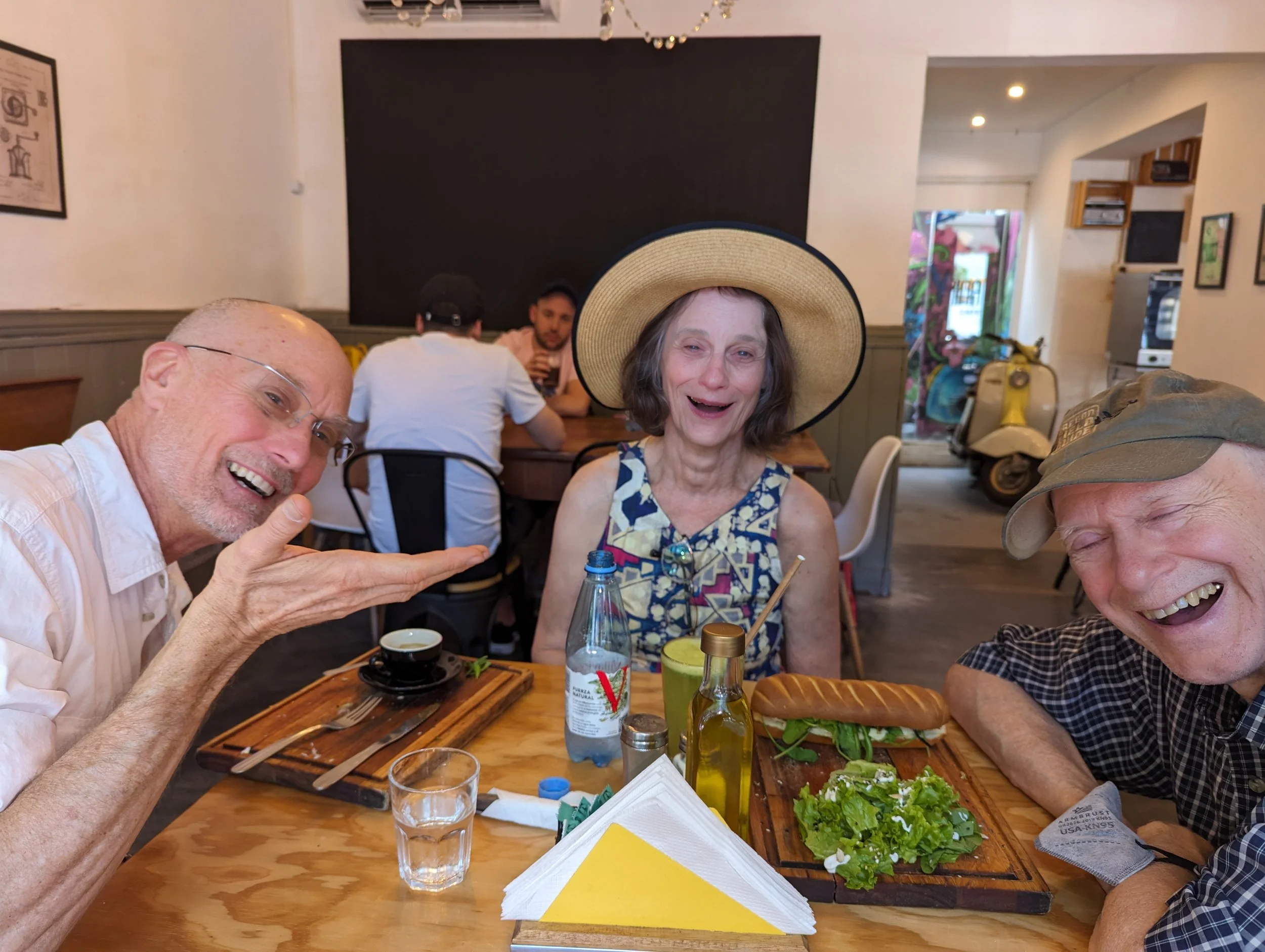
Patrick, Sally, and Tom at the Dorina Cafe
This was a favorite cafe of Tanya and Michael’s last trip, and it’s less than a block from some of our group, so I planted exhausted, hungry people at the cafe, took others to change money, then brought them back to the cafe. All of them enjoyed lunch before going to nap.

Yum! Mint lemonade, salad, and a sandwich!
The cafe offers coffee, pastries, avocado toast, sandwiches of various kinds with greens, salads, and mint lemonade. Most of their food was not gluten-free, so I didn’t eat there, but the coffee was great, and the pastries smelled amazing! You will have to ask the others how the food tasted.
Practica and class review: El Motivo (Club Villa Malcolm, Cordoba 5064)
We decided to stay close to home, as everyone was very jetlagged, so we headed over to El Motivo for the group class. As it was loud and two classes were going on simultaneously, it was difficult even for those of us who speak Spanish to hear what was going on. Still, it was fun to see everyone take their first in-Buenos-Aires tango steps. Sorry, no pictures! I forgot…
By the end of class, everyone was too tired to attend the practica, so they had a drink in the bar, and we headed out for our dinner reservation.

We are READY for dinner!
Restaurant review: Calden de Soho (Honduras 4701)
Calden de Soho had my business again, as I had intended to bring the group here before being asked to introduce my friends to “my favorite parrilla” over the weekend. I appreciated the manager’s willingness to squeeze a large group in at the last minute: I stopped by to get reservations on the way to El Motivo, and we bargained back and forth about times, but in the end, I got the reservation.
Everyone who had arrived met for dinner, and in true Argentine fashion, we spent about two hours eating! Steak, fish, ravioli, wine, salads, dessert: it’s all great food here! Don’t miss it.
Day Two, Buenos Aires 2023: A day off dancing
I slept twelve hours last night, making up for the sleepless night before. I woke up to a sunny, beautiful day. I went food shopping, hit the street fair across the street and got some Christmas presents, and then did yoga on my terrace.

I love the jacarandas in bloom!
I love walking in Buenos Aires
Later in the day, I met an old friend, and we walked 4-5 km, wandering around the city in an area I have not walked before. I may be a bit sunburned, but I did put on suntan lotion, so hopefully it won’t be bad! We strolled from Palermo to Recoleta, taking in the monstrosity that is the National Library, the beautiful Museo de Bellas Artes (where I will go later this trip), the Recoleta cemetery/street fair, and then wandered a bit toward the middle of town.

Jose Garofalo chatting with friends at his open art studio
Google has Bs As bus schedules now
We took a bus over to another neighborhood to see my friend, Jose Garofalo’s open studio, making use of Google’s new, excellent feature that even includes the address where you get on a bus and off, so you know where the stop is! This impressed Silvana, as she didn’t know about it. The bus is cheap and now it’s easy to figure out, so use it!
Restaurant review: Sarkis (Thames 1101)
Sarkis is still one of my favorite places to eat. It’s Armenian-owned but has all sorts of Middle Eastern food. They now have a menu for gluten-free listings AND if you are vegan, that is also marked on the menu.
We ordered kibbeh for her (not gluten free) and a cheesy eggplant and meat dish for me that was ENORMOUS. I was hoping to have room for dessert, but I didn’t. If you go, try to save room for their delicious desserts!
After eating, I walked home. Make that 6.1 km total walking for today!

My terrace in Buenos Aires!

It’s great to see old friends again and stroll in Buenos Aires’ parks

Park benches at the National Library

The National Library building
Day One, Buenos Aires 2023: Abasto milonga

Friends from Oregon share a meal at Calden Soho
Home, Sweet Home
After not sleeping while traveling, I arrived this morning in Buenos Aires for the tenth time. I got to my BnB, unpacked, and tried to sleep. An hour later, I woke up again, so I contacted friends from Oregon who were in town, and we had a marvelous lunch together. Calden de Soho hasn’t changed much: the same waiters, good service and AMAZING flan mixto: I love flan mixto!!!!

I never remember to take pictures BEFORE I eat!
Despite being exhausted, I headed for the milonga at the Abasto Hotel that was recommended to me by two friends. I danced four tandas, and then realized I was too tired to even want to cabeceo! Time to go home. As it was just getting dark, I took the subway one stop, remembered it was faster to walk from there and walked the other 20 minutes, enjoying the city. I can walk while too tired to dance :-)
Review: Abasto Hotel Milonga
It was easy to make a reservation for the milonga via WhatsApp, and they gave me an ok seat. This milonga was not traditional with men on one side, women on the other, and it was just big enough to make it almost impossible to cabeceo the ends of the room from my central position.
The ambience felt relaxed, and I enjoyed chatting with the woman at my table before others started to fill in. I left early because I was too jet lagged to dance, so perhaps the situation improved later in the evening.

The Sunday milonga at the Abasto Hotel, early in the evening had plenty of space to dance, but filled up later
Many faces at the dance were familiar from decades of dancing in Buenos Aires. The woman I sat with said she had taken almost twenty years off tango and came back to the same dancers! I find it sad that the older guys with whom I have danced for decades are making it to the milonga, but not really dancing anymore. I connected with a few, and it took some peering carefully at me, then dancing to say, “Oh! You!” The level of their dancing has deteriorated, but they are still great guys.
My best dances were with someone who is a dance teacher and very politely tried to market classes. The difference from the old days: respectful, non-pushing marketing. What I enjoyed most about his dance was how he used the music. I love it when I encounter someone who knows the music as well/better than myself, as I can see an alternate way to approach that song. We talked about how each song is different, has its own flavor. That was a good tanda for the end of my (short) evening.
Mate day in Portland November 30th
I will be in Buenos Aires sipping my mate on my terrace, but if you are going to be in Portland for the Mate Day, you can learn all about it at a special event. Educate Ya is sponsoring a November 30th event about mate, drinking mate and Argentine culture for $15. Check it out!
Musicality exercises to expand your dance
Many of us think of acquiring more moves as the way to become an advanced dancer. I disagree. It’s not the number of years you have danced either. For me, moves make a good intermediate dancer, but what creates an advanced dancer is being able to move with your partner to the music. The moves serve as ways to express that musicality and connection but are secondary to the actual experience of dancing. How can we move from permanent intermediate dancers to advanced dancers?
Play with “all the speeds”
Take ONE move, preferably walking, and look at all the ways you can use the music to make this one move beautiful. Start on the beat. Then work out how to pause and play with different lengths of pauses that fit the music. Then add in either slow motion or double-time (syncopation). Try out half-time, stepping one beat and then pausing for a beat. Last (or if you are a jazz musician, first) play with OFF the beat, AROUND the beat—who said you need to be a metronome? You are a human :-)
As you explore your musicality, apply this exercise to each move you know. How many ways can this specific pattern of steps work in the music? Try to make EVERY pattern you know work more than one way. Do one each time you practice. After that, play with how one pattern can fit after another pattern, and vary the musicality between the two. Rinse and repeat.
Musicality: not just for leaders anymore!
Musicality is important whether you are leading or following. I find that many people who only follow, tend to mechanically do one speed of a certain move (for example the cruzada). Then, no matter what the music or the leader suggests, the follower just performs the move automatically. Follower: practice solo and listen to what the music tells you! Vary your practice.
Start listening to tangos, valses and milongas on your own. It’s true that the leader is steering the boat when it comes to dancing, but YOU are the motor. No motor, no dance! No musicality on your part, no musicality in the dance. One of my teachers told me that I should “inspire” the leader to change their mind by giving intentions and suggestions with my dance.
It takes two to tango
For tango, how YOU hear the music counts, as a leader and as a follower. Both people are having this conversation with the music. In vals and milonga, it’s a bit more about being on the beat, so push your tango first and then let it inform your other dances.
Learn the music!
We can all carry our music collection on our phones, so include tango on your playlist. Discover what orchestras really speak to you and get to know the songs you prefer. Every few years, I find a new favorite song and/or orchestra and explore that new region of sound. One of the best compliments I ever received from an Argentine was a very happy, “You know the music! I didn’t expect that from a foreigner and a woman!”
Even now, after 28 years of tango, I still find songs I can’t remember hearing before. I have favorite orchestras and orchestras that do not excite me. I try to practice all of them, so that I can dance well even to a song that does not inspire me.
When you really know a song, it will move you to dance it well, if you have worked on your dance so that the music can flow through you and your partner.
Classes
If you are interested in exploring these ideas, please join us in class for the rest of October and November. Each class will have part of the hour dedicated to exploring the music, our partner, and our own musicality!
Contrabody for tango
Several people have asked me about contrabody recently, and since we will be working on it next week in my group class, I thought I would post a quick video about it! Yes that’s me before lockdown and growing out my hair :-)
Video describing and showing how to correctly use the body for walking forward and backwards in Argentine tango.
Getting ready for a crowded dance floor
You make me feel like dancing!
When the floor gets crowded, are you one of the people who feel that you are no longer dancing? I just spent a weekend Balkan dancing (seven tango dancers showed up in total!) to live music. The more crowded the dance floor became, the more the energy built. We got louder and happier. Shining, sweaty dancers grinned, shouted and sang. The less space we had, the more we danced in place, barely moving forward. It was awesome, and I promised myself that this year, it won’t take another entire year to repeat the experience.
How can we have this experience instead of the “stuck” experience some tango dancers describe to me when dancing in a crowded room? Learning a bunch of new moves a week before a festival will NOT help. You can review what you know, practice in small spaces, and work on better musicality/embrace/steering (which is what this week’s group classes are about), but this is not the time to pick up new material. Instead, below are a few suggestions for surviving festivals.
Survival tactics
Pretend you are having fun!
Your intention creates your experience. Make the lack of space a game instead of an impediment. Ooooh! I managed to sneak in a tiny circulo in the corner! Yes! I nailed the ending of that song exactly right! OMG! I avoided Mr. Crazy and his partner successfully! Oh Yeah! I aligned my body and it made my partner stand up! You get the idea.
Look for good energy
With the right partner, you can walk, pause, and turn well to the music — and that’s it. There is no need for lots of fancy moves in every dance. If the energy feels nice, you don’t care if the moves are fancy. I always try to dance with people who make me feel good, rather than with “good” dancers. It’s not about flashy moves ever, but especially not at a crowded festival. Search out the dancers with “buena onda” (good vibes) and you will leave the floor happy.
You’re not the only socially anxious person out there
For those of us who do not deal well with new people, or lots of people, or unfamiliar places: all three of those happen at a festival. Take some time to do yoga breathing before heading out to dance. Take breaks away from the dance floor. Find someone you know to sit with and chat if that calms you. Make plans to attend with a friend, or with a dance partner who you can count on to dance a few tandas if things are looking bleak.
Let it go, move on
Festivals are a bit crazy. I always tell my students to be prepared for strange behavior from folks they know. Some dancers choose to only dance with new or out-of-town folks, as you will be available next week, and they will not. This feels like rejection, but it does make sense. Some people are so anxious in large groups that they melt down and act less gracious than usual. Some of us are too blind to see across the floor: we didn’t refuse your cabeceo, we didn’t SEE your cabeceo! Try to let weird encounters go and move on.
Pace yourself
If you are attending the entire festival, GET SOME SLEEP! This past weekend, people in my cabin flipped on the light at 2 am looking for something, and then got up early and did the same thing. The added annoyance was the same people snoring loudly! Grr! I had planned to go to bed on time and sleep my full eight hours, but it didn’t happen. I could tell I was cranky all day. The next night, I was so tired that I slept heavily, and that next day went much better. Get some sleep, take naps, go to bed when you are tired. There will be more dancing. You won’t miss anything crucial by going home early or coming a bit late. Take your vitamins, drink liquids, eat well, and take a nap!
I hope to see all of you at the Portland Tango Festival dancing!
What tangoing in socks shows us
Thanks to the folks who fixed up my house and sold it to me, I had floors that were paper thin (a bad refinishing job). I took advantage of going out of the country to empty the first floor of my house and replace the floor. Given the price tag of that endeavor, I have followed instructions to the letter to let the finish harden, so only socks have been dancing on the floor for the past week.
Dancing in socks can improve your technique
Are you using your entire foot in the dance?
It’s easy to think that you have all four corners of your foot on the floor at the end of each step when in shoes. You can’t feel the floor as easily as when you are barefoot. However, in socks you cannot hide that heel hover left over from ballet class. You can’t disguise the fact that your foot is rolling out or in and needs strengthening exercises. You feel the floor hard against your foot if you have been popping up on the ball of your foot instead of focusing on the metatarsal arch to give you balance.
In socks, practice your front, back and side steps. Explore your ochos and your giros: where is your technique failing you, or where is your foot in need of extra attention? Because pivoting has very little friction like this, you may find a better way to get around corners!
Are you on axis?
My first tango teacher told me I should practice dancing on very slick floors and very sticky floors so that, no matter what floor appeared at a milonga, I would feel comfortable dancing. Socks give that “very slick” floor feeling and can feel a little scary at first IF YOU ARE OFF AXIS.
Dancing in socks helps you to see if you are really on balance in your steps. If you have been reaching behind you or leaning off-balance in your dance, you will really feel it in socks as your feet threaten to go out from under you. Conversely, if you are well on-axis, you have more ease of pivoting and more information from the floor than in your dance shoes.
Do your adornos feel fun and sensuous?
Drawing on the floor with your feet can feel great: the sensory feedback allows you to be more stretchy or playful or . . . whatever you want to find in your dance. Are you using the floor in your adornos, or are your feet simply near the floor? In my first private lesson with an Argentine, the teacher exhorted my partner to “gancho like a woman, not a girl” and I will apply that to adornos: really get into the move, instead of timidly suggesting a movement :-)
As a lead, are you rushing the follower or yourself?
As a leader, being on axis and using your feet is just as important as when you are following. You have the additional task of ensuring that the follower feels secure. In socks, make sure you slow down enough that the follower can safely negotiate each move. Perhaps you might consider dancing at this speed all the time for the comfort of the follower!
The size of your steps also matters. If you tend to lunge around in huge steps, think about how that feels to a shorter person or someone not 100% on axis. I suggest exploring steps that travel less but stretch up and down your axis to give you an elegant tango that does not run over more prudent dancers around you. If you can’t do it in socks, maybe it’s too big for social dance.
Socks can make you slow down and smell the roses (not the socks!)
Many of us dash about in tango, trying to ocho on every beat, punching steps to speed them up, and ignoring the more leisurely, sensuous moments of the music. Dancing in socks encourages us to slow down, to take time to savor pauses and slow motion. It gives us the gift of hearing more in each song and each partner. It allows us time to breathe.
We have a few more days with no shoes on my floor, so I will continue to revel in sock tango. Try it yourself!
Teaching from the body to the dance
How folk tradition is passed down
In a folk tradition, moves are handed down from person to person. Each person has their own style, whether it’s from their town, neighborhood, or personal choice. When you attempt to teach that in a dance studio environment, everyone wants you to give a black and white answer to a question. What is the “exact right way” to do this move?
If you honor the folk (rural or urban) tradition, you need to show the nuances of unique styles and discuss how they align or disagree with each other. Most teachers from the folk tradition just show stuff and expect you to figure it out. That’s how THEY did it! People didn’t go to dance classes to learn movement: they learned it from friends, family, or by watching good dancers. New dancers did not learn how their bodies work, but rather tried to visually imitate what they saw.
I love learning historical and folk dance forms. I spend my tango money taking lessons to study how the old milongueros danced, both their moves and their styling. I enjoy how different each dancer’s style was from his friends. My second M.A. is in cultural anthropology, and I feel it is especially important to understand the cultural background of tango (or any other movement form) and to teach that information along with dance steps.
From tradition to the dance
My teacher, Jose, is a walking repository of this tradition, able to dance in many styles and gifted in his ability to FEEL like some of the old milongueros I remember dancing with 25 years ago in Buenos Aires. This is why I bring him to Portland each year. He is a dancing archive!
However, he is also extremely flexible. He has amazing natural turnout at his hips. The way his body is built, he can easily create shapes that tax other people’s bodies. Here is where we diverge. I only realized this after teaching him yoga. We gaped at how he could easily move in an asana where everyone else struggled. I finally had my answer as to why he advocated huge amounts of hip turnout to create moves!
However, I found myself in a difficult position: trying to explain to my teacher why I was teaching a move differently than he does. I agree with his description of the moves. I agree with his historical tracing from someone’s styling to present-day tango. Despite all of that, I could not in good faith teach my students to do what he was demonstrating. Why?
From the body to the dance
As someone who holds an M.A. in dance research and pedagogy as well as certification in yoga teaching, I teach from the body to the step. For me, learning proprioception and learning to protect your body from injury in daily life is paramount. That means that, no matter how tango has been taught, we need to find ways to dance it that are based on our own body structure.
I apply body knowledge to tango and build the moves from there. If a famous milonguero always stood in a T formation, with one foot at an angle and behind the other one; and not with heels together (V), we look at the goal achieved by that movement choice. Instead of just telling people WHAT to do, I try to explain WHY something works best for most people. For example, I ask dancers to explore how much turnout THEY have in each hip joint. If the knee is being pulled off a stable hinge joint position, that amount of turnout is too much for your body. If you want to dance and walk with ease throughout your life, you cannot afford to do a move just because “it’s always been done like that.”
When you take a class from a teacher, make sure that you understand the WHY of a movement. If something feels uncomfortable on your body, look at your setup and pay attention to how it feels. A good teacher can explain why and problem-solve for your body. If it’s just a question of “I haven’t tried the move that way before” and the sticking point is in your head, then use the opportunity as an anti-Alzheimer’s moment; if the sticking point is your hip joint, you should modify the move!